On night shifts, you might head to work while someone else is clearing away dinner. A break moves, the canteen closes and, by the time you get home, sleep is the priority. During night shifts, an ordinary weekly meal plan may have little in common with the week you actually live. Still, you do not have to start every shift without a workable food plan.
A useful starting point is a small number of familiar meal anchors, with room to move them. This article turns that idea into practical questions: what can you arrange before work, what can you take with you and what will be available afterwards? Eating around night shifts can start with manageable decisions, without a universal timetable or a verdict on your willpower.
Why night shifts need a different approach
The Dutch National Institute for Public Health and the Environment, RIVM, explains that night work can disrupt the body's day–night rhythm. Shift duration and the way different shifts follow each other also matter. A well-packed lunchbox cannot remove that burden. Food is one part of managing irregular work, alongside rest and working conditions.
That is an important limit to lifestyle advice. You do not have to compensate for a difficult roster by becoming increasingly strict about food. Start with the practical situation: when can you take a break, where can you store a meal and how much preparation fits into a working day? A plan for night shifts needs to fit those circumstances. A missed break is a reason to discuss the work or adjust your preparation, rather than evidence that you have failed.
Plan night shifts around your next opportunity to sleep
Before choosing meals, write down three things: roughly when you will get up, when work begins and when you hope to sleep afterwards. Add the breaks you can realistically use. This shows where food might fit without turning the whole day into a set of strict deadlines.
If several night shifts follow each other, make a simple starting plan and adapt it as needed. When the roster changes to an early or late shift, look at it again. A colleague's timing does not have to become your template. Travel, family responsibilities and the facilities at work may all be different. Keep the first version small. One approaching shift can be a more useful experiment than trying to perfect the next month. You are making a working plan, with permission to change it after discovering what fits.
Meal anchors for night shifts, with room to move
A meal anchor is a familiar point for which you arrange something in advance. It might be a meal before leaving home, an eating opportunity during a genuine break and a simple option after work. These are planning tools, rather than instructions to add extra meals on top of your usual food.
The RIVM collection of suggestions for night workers includes maintaining an ordinary eating pattern and limiting food just before sleep. These are practical suggestions, not a proven guarantee against health problems. During night shifts, avoid treating the overnight hours as a compulsory second full day of eating. Consider how your usual meals fit across the whole day. When your waking hours or breaks change, you can reconsider that arrangement instead of following it at all costs.
A practical packed meal for night shifts
The foundations of healthy eating do not become completely different during night shifts. The Dutch Nutrition Centre's Wheel of Five is a guide to a varied eating pattern, including vegetables, fruit, wholegrain foods and different protein sources. A separate range of special night-work products is not necessary.
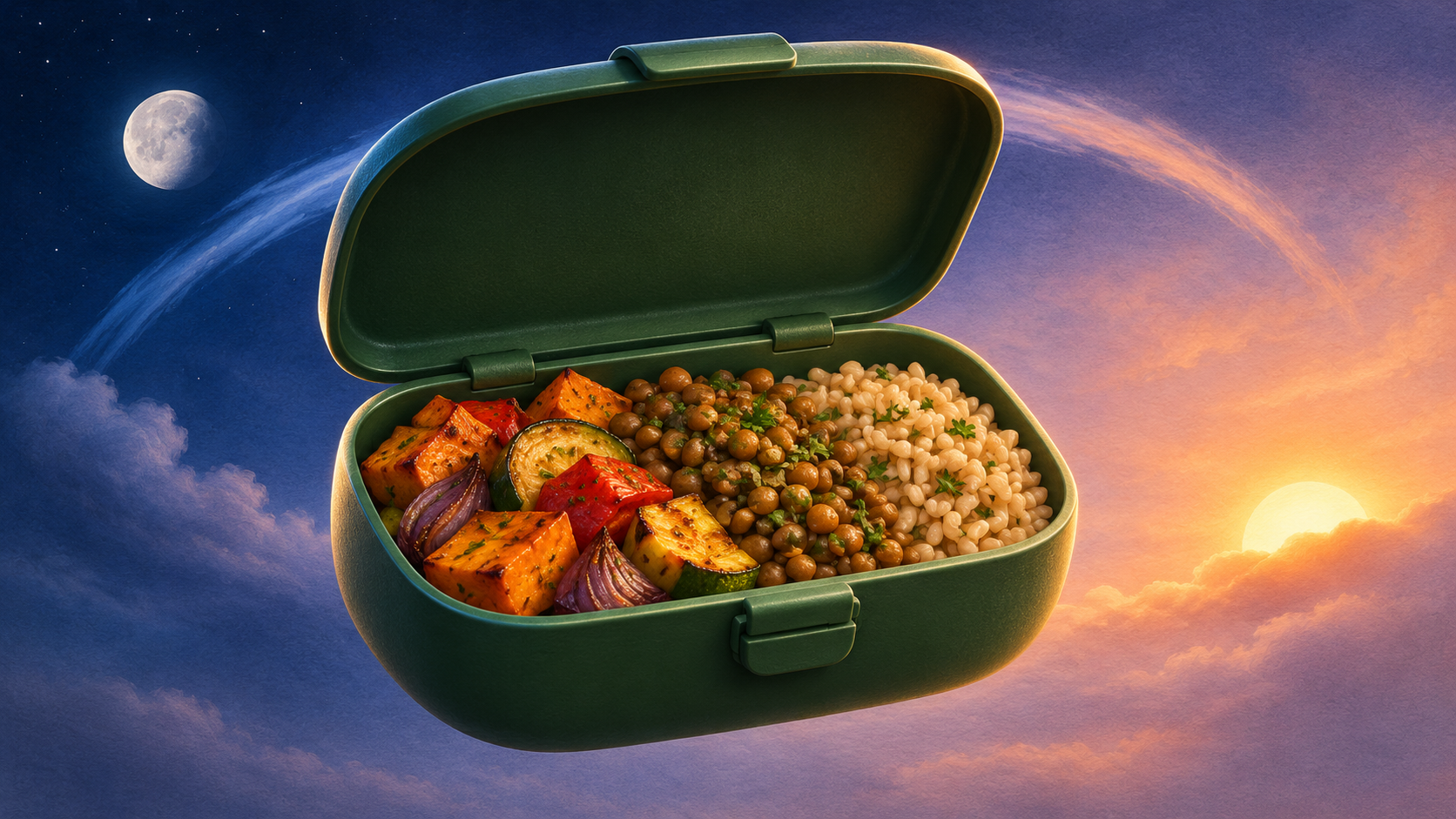
Translate that into one practical packed meal. For example, wholegrain bread with suitable fillings and vegetables, or a dish combining grains, pulses and vegetables. Choose something you enjoy and can actually eat at work. A recipe that depends on an oven is less convenient if only a microwave is available. Your preferences, allergies and any individual dietary advice still come first. Two familiar options may be a better starting point than seven new recipes that all require substantial preparation. A useful meal needs to work on a busy day as well as on paper.
Appetite during night shifts: observe without scoring
Food during night shifts does not always fit neat labels. Was something a meal, a snack or simply what was available at the time? You do not have to classify it as good or bad straight away. First, notice the circumstances. Had you brought something with you? Was a break available? Did you have a chance to eat without rushing?
A planned backup can be useful if you would otherwise depend entirely on what is available at work. Choose something that fits your preferences and storage options. For night shifts, it is a possibility to keep in reserve, rather than a compulsory additional eating occasion. Hunger does not need to be argued away because a strict timetable says otherwise. Equally, packing a portion does not oblige you to eat it. Looking at what happened is a more practical starting point than giving yourself a score after every shift.
Caffeine during night shifts: start with bedtime
The right timing for a final caffeinated drink is not identical for everyone. The Dutch Nutrition Centre's information on caffeine describes differences in sensitivity and possible effects on sleep. Tea, cola and energy drinks can contain caffeine too. What another person tolerates is not automatically a useful guide for you.
If you want a clearer picture during night shifts, note when you have caffeinated drinks and when you intend to sleep. This can make a pattern easier to discuss without inventing one universal cutoff time. Have a caffeine-free option available as well. Coffee should not become a reason to keep postponing sleep or a necessary break. If tiredness or sleep difficulties keep returning, discuss them with a health professional rather than continually trying to solve the situation through changes to coffee alone. The purpose of noticing a pattern is to support a useful conversation, not to diagnose yourself.
Food storage and reheating for night shifts
A meal that is straightforward at home can be awkward at work. Is a fridge available? Can you transport the food under suitable chilled conditions when necessary? Can you reheat it, and will there actually be time? These questions belong in the preparation for night shifts, rather than being surprises when you open your bag.
Follow product storage instructions and use the Dutch Nutrition Centre's food-storage guide when you need to check a particular food. Without suitable refrigeration, choose something that can be stored safely in your circumstances. Consider the packaging as well: can you carry, open and eat the meal without setting up a complicated arrangement? Put any necessary eating utensils together. The aim is less unexpected hassle during a busy shift. Your preparation does not have to look impressive; one small practical improvement may be enough.
Keep coming home after night shifts straightforward
After night shifts, a complicated cooking task may be the last thing you have energy for. Decide beforehand what simple option you would like available if you are hungry when you return. That removes one decision from a tired moment. You also do not have to eat a large meal automatically because the rest of the household is sitting down to breakfast.
Sleep deserves space of its own. The Dutch clinical information service Thuisarts advises night workers to arrange a quiet, dark sleeping environment, among other measures. Discuss what that means at home. An agreement about noise, shopping or preparing food can be more practical than making the menu more elaborate. Planning around night shifts should make a few decisions easier, rather than filling your rest time with another long list of jobs. Support from the people around you can be part of the plan.
Two example routes for night shifts
Imagine that you can eat at home before work and have one usable break during the shift. You might arrange an ordinary meal beforehand, take something for that break and leave a simple option at home in case you are hungry afterwards. Think about which of your usual eating occasions has moved. This is not a list of additional meals to add regardless of what you already eat.
A different roster might make a shared meal before leaving impossible. You could move some preparation to an earlier moment and choose something practical to eat at work. These are editorial examples, not customer stories or prescriptions. Times and portion sizes are deliberately left open. For night shifts, having an alternative you can use is more helpful than pretending everyone has the same breaks, kitchen facilities or appetite. Keep whatever fits your circumstances and adapt the rest.
One small change for your next night shifts
Making night shifts more manageable does not mean changing shopping, every break and your entire sleeping routine at once. Choose one difficulty from your recent night shifts. Perhaps there was nothing to take with you, the packed meal was inconvenient or there was no simple option at home. Then choose one small change you can realistically make.
That could mean selecting one packed dish beforehand or asking what storage is available. After a few shifts, consider whether the change actually made preparation easier. Make a short note about what you want to keep and what did not fit. Do not draw medical conclusions from a few observations or try to prove a health effect using isolated days. A note is mainly a reminder for the next decision or a conversation with a professional. You do not need to turn it into another performance report. Keep the process small enough to use again.
Use FitterVitaal for the food-planning part
Would you like to make fewer food decisions from scratch? The FitterVitaal app page explains the current recipe, meal-planning and shopping-list features. Those tools can help you prepare the food-planning part of night shifts. The app is not a work-roster planner, a sleep treatment or medical supervision, and it cannot remove the strain of night work.
First, see whether the approach fits what you need. If you want to get started, follow the registration button on the FitterVitaal app page to create an account. For a first attempt, choose one approaching shift and one suitable meal. That gives eating around night shifts a practical starting point: something you can use in your actual week, with room to change it when the roster changes.
If persistent sleep difficulties or tiredness affect safe working or travelling home, or you have questions about food with a medical condition, talk to your GP or occupational physician. A dietitian can help with individual nutrition questions. Do not change a medical eating or medication schedule based on this general article.