
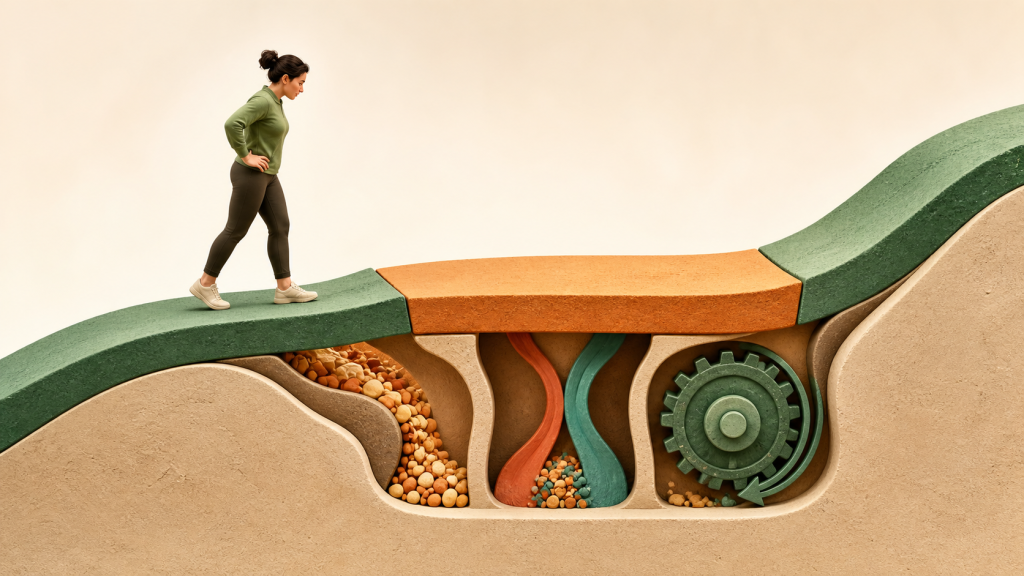
A weight loss plateau can feel unfair. You have changed how you eat, paid attention to your choices, and yet nothing seems to happen for weeks. The first reaction is often to eat even less, add more cardio or remove every social occasion. That is rarely the best first step.
A weight loss plateau is mainly a signal to check the process calmly. Is your tracking still accurate? Have portions gradually grown? What does your complete week look like? Do you move as much outside your workouts as you used to? And does your original plan still fit a lighter body? A short, honest audit often reveals more than a stricter emergency plan.
This article is about a trend that truly stays flat for several weeks, not one high reading. For normal day-to-day changes, read our article on why weight fluctuates.
When is stalled progress really a weight loss plateau?
Do not label every quiet week a weight loss plateau. Body weight does not change in a straight line, and the first weeks often move faster, partly because more water may be lost at the start. The Dutch Nutrition Centre notes that weight loss normally becomes slower after that. Look at several comparable measurements and the trend across multiple weeks.
Measure under roughly the same conditions. One weekly morning measurement may be enough. You can also consider waist measurement, how clothes fit, training performance and how consistently you follow your habits. If the average truly does not fall for several weeks and other indicators are unchanged, a weight loss plateau audit makes sense.
A weight loss plateau does not mean your body has suspended the laws of energy balance. It usually means that the gap between intake and expenditure has become small, is temporarily hidden, or no longer exists in practice. Identify the likely cause before changing the plan.
1. Track seven normal days again
Do not start by estimating from memory. Track everything you eat and drink for seven consecutive days. Choose an ordinary week containing workdays and a weekend. Include cooking oil, milk or sugar in coffee, sauces, dressings, tastes while cooking and leftovers from someone else's plate.
The Dutch Nutrition Centre recommends a food diary because it shows what and how much you actually consume. It specifically notes that small tasting moments count too. Its Mijn Eetmeter tool is one free option for Dutch readers. The goal is not lifelong administration, but a short measurement of your current pattern.
Do not improve your diet simply because you are recording it. A weight loss plateau audit only works when Saturday evening, drinks and takeaway are included. Record first and judge later.
2. Check portions, not only food choices
A nutritious food can still provide more energy when the portion grows. A splash of oil becomes two, a handful of nuts becomes a generous bowl and a spoonful of peanut butter develops a peak. Rice, pasta, cheese, granola, sauce and toppings are also easy to underestimate by eye.
Weigh or measure these energy-dense items again for a few days. Check whether your app entry refers to the dry or cooked amount and compare your actual serving with the label. The Dutch Nutrition Centre highlights that larger packs, plates and servings often lead people to eat more.
You do not need to weigh every cucumber. Start with foods where a small change in volume can add substantial energy. This keeps the check practical and helps reveal whether portion drift contributes to your weight loss plateau.
3. Review the whole week, including Friday night
Five structured days can be balanced out by two more generous days. That does not make the weekend bad; it simply means your body does not distinguish Monday from Saturday. Restaurant meals, alcohol, snacks, larger breakfasts and less structure can change the weekly average together.
Do not total only your tidy workdays. Review the complete week. A weight loss plateau can become understandable only when those less structured days are visible too. Our article about weekend eating explains how to see that balance without turning Sunday into a punishment day.
Look for one or two repeated choices behind the weight loss plateau. The dinner itself may not be the difference; the combination of drinks, shared snacks and a late bite might be. One targeted adjustment is more useful than extreme compensation after every weekend.
4. Look at everyday movement outside exercise
Three weekly workouts can coexist with less movement during the rest of the day. You may feel tired after training, work from home more often, drive more or sit longer in the evening. Total expenditure can therefore fall even when your exercise programme stays the same.
Track movement alongside food, or review your average steps. The Dutch Nutrition Centre counts sport, brisk walking and cycling, and recommends making movement part of the daily routine. During a weight loss plateau, compare a current workday with the period when your trend was still moving.
At a weight loss plateau, try restoring ordinary movement first: walk after lunch, cycle a short journey, take calls while walking or stand up each hour. More is not automatically better. A sustainable daily minimum is more valuable than one punishment workout.
5. Account for a lighter body
As you lose weight, your body generally needs less energy. Moving a lighter body also uses less energy. The Dutch Nutrition Centre notes that energy needs fall after weight loss because you are lighter. A plan that created a clear deficit at the beginning can therefore move closer to maintenance later.
That does not prove your metabolism is broken or make a weight loss plateau permanent. It is a normal response to a changed body, alongside possible changes in activity and appetite. If needed, estimate your needs again with current data and treat calculators as estimates rather than promises.
Do not blindly remove hundreds of calories. Check the previous points first. If tracking is reliable and the weight loss plateau remains, choose a small adjustment you can maintain, such as slightly smaller portions of energy-dense extras or a little more daily walking.
6. Take sleep and recovery seriously
Short sleep does not magically make a weight loss plateau inevitable, but it can make the weight loss plateau plan harder to carry out. Fatigue may come with more hunger, impulsive choices, poorer workouts and less spontaneous movement. Recovery and motivation may also suffer.
Check bedtime, sleep duration and your evening routine alongside calories. A weight loss plateau does not require perfect sleep. Begin with a stable wake time, avoid caffeine late in the day, keep the final half-hour calm and make the bedroom sufficiently dark and cool. Also read sleep and weight loss.
If loud snoring, breathing pauses, extreme sleepiness or persistent insomnia apply to you, talk to your doctor. A nutrition plan is not a treatment for a sleep disorder.
7. Give one adjustment enough time
If you simultaneously cut carbohydrates, start running, skip breakfast and remove every snack, you will not know what worked. The plan can also become unnecessarily strict. The Dutch Nutrition Centre advises against crash diets because they are hard to maintain and do not build a sustainable lifestyle.
After your audit, choose one concrete step and keep it stable for two to three weeks. Examples include measuring oil, tracking workdays and weekends, walking twenty minutes daily or using a consistent bedtime. Then assess the same trend again.
Patience does not mean waiting passively. It means repeating the same plan long enough to collect useful information. That turns a weight loss plateau into a measurement problem you can investigate calmly, not a test of character.
Keep what already works while you investigate a weight loss plateau. There is no reason to abandon vegetables, regular meals, strength training or daily walks just because the weight loss plateau is frustrating. Those habits still support health. Record one process goal alongside weight, such as tracking six out of seven days or walking every workday. This shows whether the weight loss plateau plan is actually being carried out, not only whether the scale has responded yet.
A simple weight loss plateau audit for this week
Use this order:
1. Check whether the trend has genuinely been flat for several weeks.
2. Track seven complete, ordinary days.
3. Measure energy-dense portions again.
4. Review the whole week, including drinks and weekends.
5. Compare steps and everyday movement with your earlier routine.
6. Record sleep and recovery.
7. Select no more than one small adjustment and review it after two to three weeks.
Keep eating a normal, varied diet during this weight loss plateau audit. Vegetables, fruit, whole grains, protein sources and enough fluids are a stronger base than skipping meals. Calories provide information about energy; a balanced dietary pattern also protects the nutritional quality of your plan.
When professional support makes sense
Ask your doctor or a registered dietitian for help if the weight loss plateau remains despite reliable tracking, if you use medicines that can affect weight or appetite, or if symptoms such as extreme fatigue, excessive thirst, menstrual changes or other unexplained problems occur. The Dutch Nutrition Centre likewise recommends professional advice when further weight loss genuinely does not happen.
Seek support if binge eating, strong fear around food, increasingly rigid rules or a history of an eating disorder are involved. Further restriction without guidance is not the safe next step in those situations. Minors, pregnant or breastfeeding people, adults over 70 and people with medical conditions also need additional care.
Conclusion
A weight loss plateau calls for accuracy before panic. Check seven ordinary days, portions, weekend intake, drinks, everyday movement, sleep and your current energy needs. Only then decide whether a small adjustment is necessary.
The goal is not to make the weight loss plateau plan progressively harsher. It is to create a small, practical difference again and maintain it long enough. If reliable execution brings no change or symptoms are present, ask a doctor or dietitian to investigate with you.
Sources
- Dutch Nutrition Centre: what can I do if weight loss no longer works? (Dutch)
- Dutch Nutrition Centre: keeping a food and movement diary (Dutch)
- Dutch Nutrition Centre: does calorie counting help with weight loss? (Dutch)
- Dutch Nutrition Centre: do larger portions make you eat more? (Dutch)
- Dutch Nutrition Centre: can popular diets help me lose weight? (Dutch)


