Protein at breakfast is a practical option when hunger returns soon after your first meal. Breakfast is not magic, but its composition changes how useful it feels. A croissant and coffee provide something different from yogurt with fruit or wholegrain bread with egg. A protein at breakfast therefore works best with fibre, fruit or vegetables and a portion that suits your day.
This article provides general nutrition information, not medical advice. If you have kidney disease, diabetes, an eating disorder, pregnancy, food allergies or a prescribed diet, discuss major changes with a doctor or dietitian. The Dutch Nutrition Centre says most people in the Netherlands already get enough protein. The goal is not maximum protein; it is a better-balanced breakfast.
Protein at breakfast and fullness
Protein is more satiating than carbohydrates and fats, according to the Dutch Nutrition Centre. A protein at breakfast may therefore help you feel full for longer. It cannot guarantee a snack-free morning: sleep, stress, habits and the complete meal also matter. Still, a substantial breakfast often gives you a stronger starting point than food that is mainly sweet and easy to eat quickly.
Protein is only one part of fullness. Combine a protein at breakfast with fibre and volume. Plain quark with oats and fruit works, as does wholegrain bread with egg and tomato. Whole grains and fruit make the meal more complete. Juice beside sugary cereal is not an equivalent swap.
Portion and pace matter too. A tiny tub of skyr eaten in two minutes may simply be insufficient. An enormous breakfast may supply more energy than you need. Build a protein at breakfast that you can eat calmly and that fits your appetite, goal and morning.
How protein supports muscle
Protein provides amino acids used to build and repair tissues, including muscle. A protein at breakfast contributes to your total daily intake. That can be useful when you do resistance training, are getting older or want to support muscle retention during weight loss.
One meal does not work alone. Training provides the stimulus, enough total food supports recovery and consistency matters. A protein at breakfast cannot compensate for a week without movement, and it does not need to resemble a bodybuilding meal. Ordinary supermarket food is usually enough.
The Dutch Nutrition Centre lists dairy, eggs, fish, lean unprocessed meat, legumes, tofu, whole grains and nuts among protein sources. This means a protein at breakfast can be animal-based, plant-based or mixed. Variety also brings nutrients beyond protein.
Six easy supermarket breakfasts
A useful protein at breakfast does not require a twenty-step recipe. These combinations take only minutes:
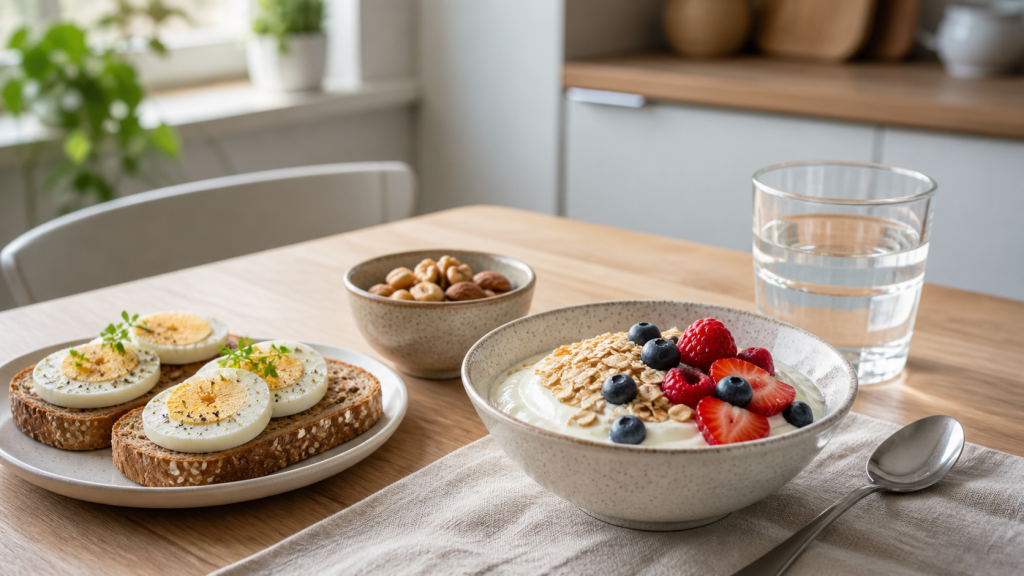
- Plain low-fat quark or skyr with oats, berries and a small portion of unsalted nuts.
- Two or three slices of wholegrain bread with boiled egg, cucumber and tomato.
- Low-fat yogurt with oats, fruit and a spoon of 100% peanut butter.
- Wholegrain toast with cottage cheese, tomato and pepper.
- Oats cooked in low-fat milk or fortified soy drink, with fruit on the side.
- Tofu scramble with vegetables and wholegrain bread as a fully plant-based option.
For plant-based yogurt, check that it contains enough protein and added calcium, vitamin B2 and vitamin B12. Coconut yogurt is generally low in protein. Soy may be more suitable, but labels differ. You cannot identify a protein at breakfast from sporty packaging words alone.
Plain versions are a calm base. Flavoured products may contain more added sugar. Add fruit and cinnamon yourself. This gives you more control over taste, fibre and portion without making a protein at breakfast dull.
How much protein belongs at breakfast?
There is no universal breakfast number that everyone needs. Requirements depend on body weight, age, health, energy intake and activity. Look at the entire day first. If lunch and dinner already provide plenty, a protein at breakfast does not need to become an extreme product.
Use labels as a practical tool. Compare protein per 100 grams and per serving, but also check saturated fat, added sugar, fibre and energy. More protein is not automatically better when the portion is much larger or the product is essentially a dessert.
Try a simple test: does breakfast contain a clear protein source, a fibre-rich base and fruit or vegetables? Can you usually function comfortably until your next planned meal? Then your protein at breakfast is probably doing its job.
Avoid common mistakes
The first mistake is counting only protein. Four eggs with cheese provide protein but little fibre and potentially plenty of saturated fat. Add wholegrain bread and vegetables and choose quantities deliberately. A protein at breakfast remains part of a complete eating pattern.
The second mistake is drinking breakfast. A large shake goes down quickly and may feel less satisfying than ingredients eaten from a bowl. Most people do not need powders. Ordinary food makes chewing, portions and fullness more concrete.
The third mistake is accidental stacking. Quark, nuts, peanut butter, granola and honey can all be nutritious, but together they can supply considerable energy. Use normal topping portions. A protein at breakfast is not permission for an unlimited bowl.
The fourth mistake is improvising every morning. Hunger and hurry favour the easiest choice. Keep two fixed options ready. Boil eggs ahead, leave oats visible and stock quark, fruit or soy yogurt.
Match breakfast to your morning
Not every morning has the same demands. If you train early, a large amount of protein at breakfast immediately before exercise may feel heavy. You could eat something small beforehand and have most of breakfast afterwards. If you work for hours before lunch, your first meal may need to be more substantial. Consider travel, training and the next realistic opportunity to eat.
If you have little appetite in the morning, do not force a huge bowl immediately. Start with a smaller portion of quark, bread with egg or yogurt and oats. You can take the second part with you. Protein at breakfast only helps when the routine is realistic enough to survive beyond three days.
For families, a set of separate basics often works well. Put out wholegrain bread, eggs, plain dairy, fruit and sliced vegetables. Everyone can build an individual combination. This keeps protein at breakfast normal family food instead of requiring a separate diet recipe.
Meal prep without a Sunday project
Preparation does not require seven identical containers. Boil four to six eggs, portion oats into jars and keep frozen fruit ready. Check twice a week whether the basics are still in stock. Ten minutes of preparation can prevent many rushed choices.
Create variety with small swaps. Use apple and cinnamon one day and berries the next. Alternate egg with cottage cheese or peanut butter. Protein at breakfast remains a recognisable structure while flavour and texture change. That is often more sustainable than finding a new recipe every day.
Keep a non-refrigerated backup too, such as wholegrain crackers, a small portion of unsalted nuts and fruit. Add a fresh protein source when possible. This gives you an office or travel safety net without turning a bar in sporty packaging into the automatic answer.
Judge the effect, not only the numbers
After a week, assess whether protein at breakfast is helping. Notice physical hunger, concentration and the urge to snack without thinking. Breakfast does not need to keep you full until dinner. It should create a sensible bridge to your next planned meal.
If hunger remains high, first check whether the total portion is sufficient and includes fibre. Add wholegrain bread, more oats or fruit. If you feel uncomfortably full for hours, reduce the portion. This lets protein at breakfast serve your routine rather than chase the highest possible number.
Do not assume every craving proves a protein shortage. Poor sleep, stress, boredom or visible snacks can all trigger eating. Protein at breakfast addresses the food side, while environment and daily rhythm still matter.
Plan your protein at breakfast in Vytal
Vytal-friendly planning starts with repetition. Choose two formats: perhaps a bowl on home days and wholegrain bread on workdays. Add the ingredients to your shopping list and adjust quantities to your personal menu. That removes a daily decision.
Create an emergency option too. Plain quark with a banana or wholegrain bread with egg is faster than searching for food on the way. To continue the same approach later, read high-protein snacks that actually satisfy. For weekly structure, use Vytal routine: planning, shopping, tracking and adjusting.
For one week, briefly note when you eat breakfast, what you choose and when genuine hunger returns. Then change one thing: a little more quark, an extra slice of bread, fruit on the side or fewer sweet toppings. This makes a protein at breakfast personal without obsessive tracking.
Conclusion
A protein at breakfast can create a calmer morning because protein is relatively satiating and supports muscle building and repair. The most useful version combines an ordinary protein source with whole grains, fruit or vegetables and an appropriate portion.
Do not begin with supplements or complicated recipes. Pick two supermarket breakfasts, keep the ingredients ready and plan them in Vytal. Then judge hunger and energy across the morning. A protein at breakfast succeeds when it is nutritious, achievable and repeatable.


