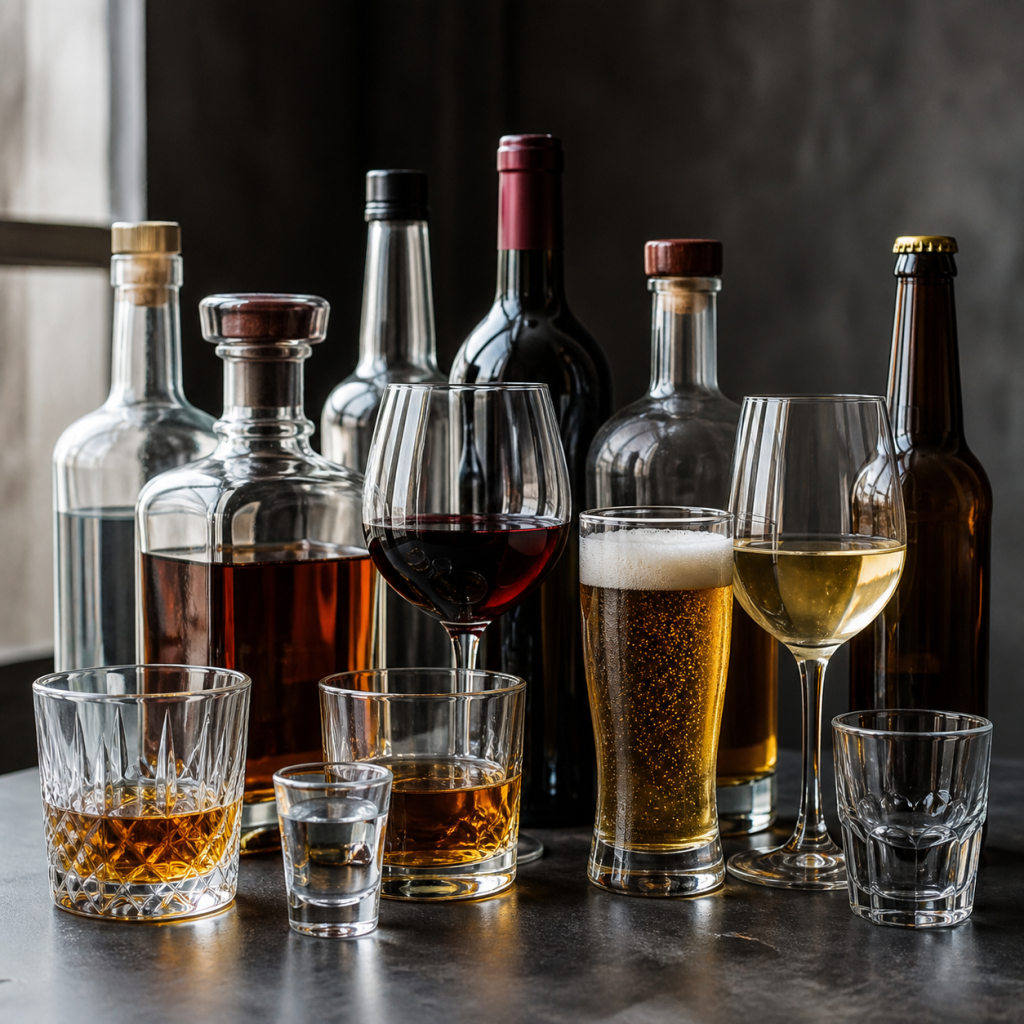
Alcohol and weight loss work together much worse than many people want to admit. Not because you are a bad person if you drink, but because alcohol itself works against your body and your goals. It has become normal as a reward after work, as weekend fun, as stress relief and as a standard part of social life. But normal does not mean healthy.
At FitterVitaal, we prefer to be clear: alcohol is not a nutrient your body needs. It is ethanol, a substance your body has to break down because it is harmful. During that process, your body produces acetaldehyde, a toxic compound that can cause damage. The World Health Organization links alcohol use to liver disease, cardiovascular disease, several cancers, mental health problems and alcohol use disorders. The National Cancer Institute explains that ethanol can be converted to acetaldehyde, a toxic chemical that can damage DNA and proteins.
That does not mean one sip destroys your life. It does mean alcohol is not a neutral habit. If you seriously want to lose body fat, become fitter, sleep better, train harder or think more clearly, alcohol makes the process heavier. For many goals there is practically no good reason to keep it in. The strongest choice is simple: do not drink. Ideally, not at all.
Alcohol and weight loss: why it works against you
Alcohol and weight loss clash on several levels. The first level is simple: alcohol provides calories. Pure alcohol provides about 7 kcal per gram. That is almost twice as much as carbohydrate or protein, and the calories from beer, wine, mixers, cocktails, snacks and late-night food often come on top.
A few drinks can quickly take a large part of your daily calorie budget. But that is not even the biggest issue. The bigger issue is that alcohol worsens your choices. Inhibition drops, planning disappears more easily, appetite often rises and it becomes easier to think: I will start again tomorrow. That is where alcohol and weight loss often fall apart.
Alcohol also disrupts recovery. Poorer sleep, less deep rest, dehydration, more inflammatory load and lower training quality make consistency harder. You do not only have to process the calories from the drinks. You also pay the next day: less energy, less discipline, less movement and often more cravings for salty, fatty and easy food.
That is why we say this clearly: if fat loss is your goal, alcohol does not help you. It makes almost everything harder.
Why alcohol has become so normal
The strange thing about alcohol is that almost everyone knows it is not healthy, yet society protects it. If you say no to alcohol, people often ask questions. Why are you not drinking? Are you ill? Are you driving? Come on, be fun. As if not drinking needs an explanation.
That shows how deeply alcohol is built into culture. Wine after work feels normal. Beer with football feels normal. Champagne when something is celebrated feels normal. Spirits during a night out feel normal. Many people drink daily or almost daily and do not call it a problem because it is "only a few glasses."
But your body does not see social meaning. Your body sees ethanol. Your liver has to prioritise breaking down alcohol because your body does not want it circulating. Your sleep quality can drop. Your recovery can suffer. Appetite and self-control can change. Disease risk rises as you drink more and more often.
Normalisation makes alcohol more dangerous because people stop seeing it as a choice with consequences. They see it as a reward. After a workday you "deserve" a drink. After a stressful week you are "allowed" to let go. But if your body is supposed to become stronger, fitter and healthier, it makes little sense to reward yourself with something that fights those goals.
What alcohol does inside your body
Alcohol is absorbed into the blood quickly. Your body cannot store alcohol like fat or carbohydrate. It has to break it down. The liver does much of that work. Ethanol is first converted to acetaldehyde. Acetaldehyde is then broken down further to acetate and eventually processed into water and carbon dioxide.
That middle step matters. Acetaldehyde is toxic and plays a role in alcohol-related harm. The National Cancer Institute calls acetaldehyde a toxic chemical and probable human carcinogen that can damage DNA and proteins. Alcohol can also increase oxidative stress, which creates extra strain on cells.
The NIAAA explains that alcohol can affect the whole body: not only the liver, but also the brain, gut, pancreas, lungs, cardiovascular system, immune system and more. That is exactly why alcohol does not fit the image of an innocent reward. You may feel relaxation, but internally your body is cleaning up.
The liver also takes a heavy load. Regular drinking can contribute to fat accumulation in the liver, inflammation, scarring and eventually serious liver disease. Not everyone develops the same harm at the same amount, but that does not make alcohol safe. Genetics, body weight, sex, nutrition, sleep, medication and drinking pattern all matter.
Alcohol makes goals harder
Alcohol and goals do not match well because goals require repetition. Weight loss, muscle gain, fitness, better blood markers, more energy and a calmer relationship with food are not won by one perfect Monday. They are won by weeks and months of enough good choices.
Alcohol interrupts that repetition. You sleep worse. You train worse. Recovery slows down. You often eat more than planned. Your rhythm shifts. The next morning movement feels harder. Mentally, the all-or-nothing effect appears: yesterday went wrong, so today does not matter either.
For weight loss, this matters a lot. You can eat well for five days and then erase the weekly deficit in two evenings of alcohol, snacks and less movement. Not because you are weak, but because alcohol creates the exact conditions in which weaker choices become easier.
If you want real control, start with overview. Estimate your maintenance and target calories with the FitterVitaal calorie need tool. You can also read how to choose starting values with our calculator tools for BMI, body fat and calories. Once you see the numbers, it becomes clear how much room alcohol takes. Most of the time, that room is better spent on food that helps your body.
Alcohol and sleep: hidden damage
Many people say alcohol helps them sleep. It can feel that way because it makes you drowsy. But becoming drowsy is not the same as sleeping well. Alcohol can disturb sleep structure, lower sleep quality and leave you less refreshed the next day.
Sleep is not a luxury. It is recovery. Good sleep helps regulate hunger, stress, training recovery, memory, mood and energy. If alcohol worsens sleep, it damages not only the night but also the next day.
For someone with health goals, that is a big deal. Poorer sleep often means more hunger, less patience, more need for quick energy and less motivation to train or walk. Your goal does not become 5 percent harder. Sometimes it feels 100 times harder because you have to rely on willpower while your body is tired.
Alcohol, muscle and recovery
If you want to become stronger or maintain muscle while losing fat, you need recovery. Training is the stimulus. Nutrition and sleep make adaptation possible. Alcohol sits between them as interference.
After alcohol, you are more likely to eat worse, miss your protein target, go to bed later and recover less effectively. That means your training stimulus gives you less return. You can still train, but you are not making it easier for your body to become stronger.
For people losing fat, muscle retention matters. More muscle helps your body stay strong, functional and energetic. That is why FitterVitaal focuses not only on calories, but also on protein, training, sleep and consistency. Alcohol helps none of those.
For a practical approach with normal food, personal calories and macros, read our article about the Vytal app and healthy eating. That kind of structure works better than trying to "fit in" alcohol and hoping the rest still goes well.
Alcohol as a reward after work
One of the most damaging patterns is alcohol as a daily reward. You worked hard, so you have a glass. You had stress, so you deserve relief. The day was long, so you open something.
The problem is not only that you drink. The problem is that you teach your brain that relaxation comes from a bottle. Alcohol becomes linked to rest, closure, pleasure and reward. The more often you repeat that, the more automatic it becomes.
A better reward moves your body forward. Walking. Showering. Preparing food. A good meal. Training. Reading. Going to bed on time. Calling someone. Choosing an alcohol-free drink. It sounds less dramatic, but it builds something instead of breaking something down.
If you notice that you need alcohol daily to relax, take that seriously. That is not a character flaw, but it is a signal. Stopping can also cause withdrawal symptoms. If you drink heavily or daily and you are unsure whether stopping is safe, speak with your doctor or addiction support. Do not stop abruptly without medical guidance if dependence or withdrawal may be present.
Is there any room for alcohol?
For some people, "no alcohol" sounds extreme. But turn it around. If a substance is not needed, worsens sleep, slows recovery, adds calories, weakens choices and raises disease risk, why create room for it?
The WHO has stated that alcohol-related risks start from the first drop and that no level of alcohol use can be considered safe for health. Mayo Clinic also writes that drinking alcohol in any amount carries a health risk, with risk increasing as intake rises. That does not mean everyone gets the same harm, but it does mean "healthy drinking" is not a strong argument.
At FitterVitaal, nobody needs to be perfect. But the honest message is clear: for health, fat loss, training, sleep and mental clarity, avoiding alcohol is the best choice. Not only in January. Not only during weekdays. Preferably as a long-term standard.
If you drink now, start with one clear step. Remove alcohol from your home. Choose alcohol-free options socially. Plan evenings differently. Say simply: I do not drink. You do not need to defend that. You are choosing your body, your goals and your future.
Practical steps to avoid alcohol
Make it easier for yourself. Discipline works better when your environment helps.
- Do not keep alcohol at home.
- Choose an alcohol-free drink before social events.
- Tell people briefly that you do not drink and avoid debate.
- Plan something after work that relaxes you without alcohol.
- Track how much better you sleep without alcohol.
- Track alcohol honestly in your calorie app, including the snacks afterwards.
- Use your weekly goal as motivation: less alcohol often means more control.
- Seek help if stopping creates anxiety, shaking, sweating, panic or strong cravings.
For your goals, this is not a small upgrade. It is one of the most powerful choices you can make. Less alcohol often means better sleep, better choices, better training, fewer empty calories and more trust in yourself.
Conclusion
Alcohol and weight loss do not fit well together, but this is bigger than weight loss alone. Alcohol works against your body, recovery, sleep, discipline and long-term goals. It has become culturally normal, but biologically it remains a harmful substance your body has to process.
You do not need perfect eating. You do not need perfect training every day. But if you seriously want better health, fat loss, energy and mental clarity, alcohol is a poor trade. You give up a lot for a short buzz.
The practical FitterVitaal message is clear: do not minimise alcohol. Do not treat it as a reward. See it as something that makes your goal harder. If you want the best chance of progress, choose no alcohol.


