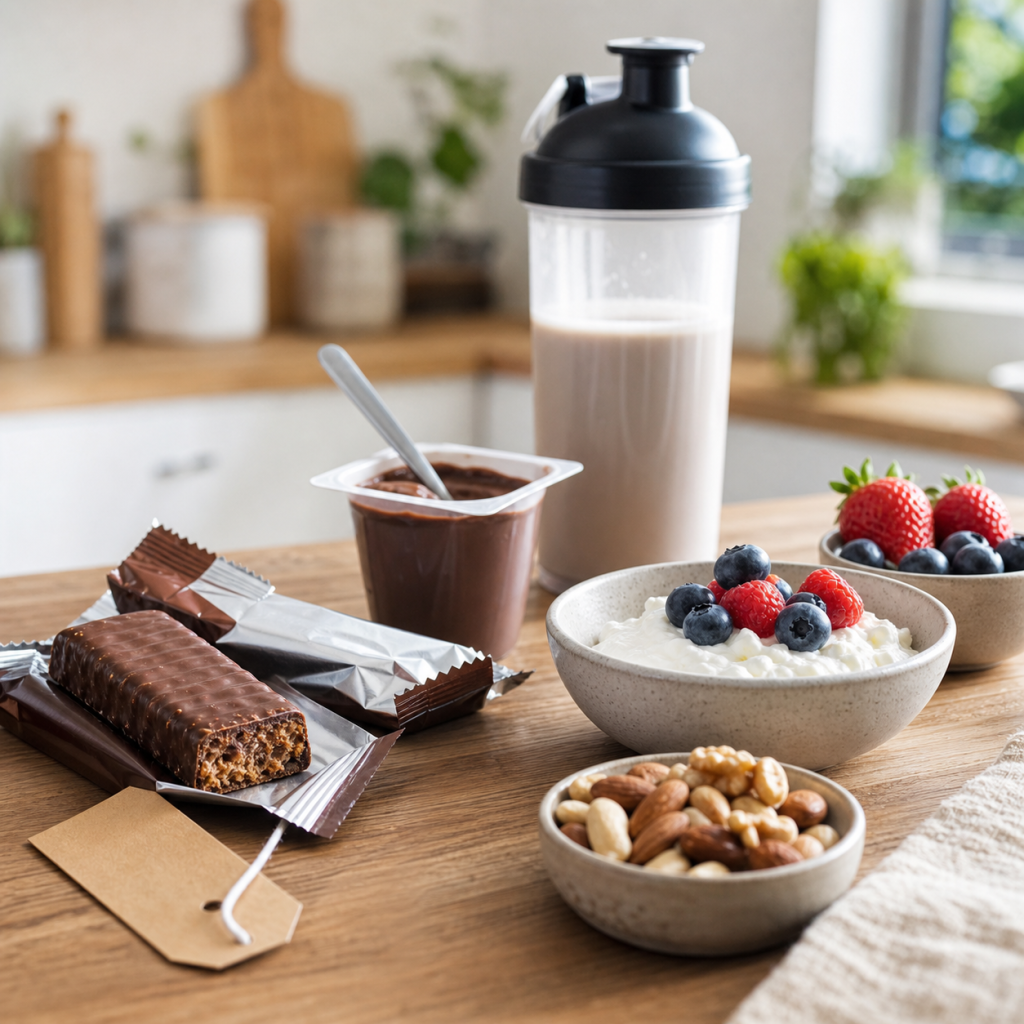
Protein snacks are everywhere now: bars, puddings, shakes, cookies, crisps and dairy desserts with extra protein. That can be useful. A protein snack can bridge a busy afternoon, help after training or stop you from arriving home extremely hungry. But protein snacks can also be expensive candy with a health label.
At FitterVitaal, we do not judge the front of the package first. We turn it around. How much protein do you really get? How many calories come with it? Does the product contain fibre, or mostly chocolate, fat, sweeteners and marketing? And what does that portion cost compared with yogurt, quark, eggs, legumes or a normal meal?
The short version: protein snacks are not a problem, but they are not magic weight-loss products either. The Dutch Nutrition Centre says most people already get enough protein and that products with extra protein, such as bars, powders and shakes, are usually not necessary. Use protein snacks as a practical backup or planned addition, not as the base of your diet.
Protein snacks: read the label before the promise
Protein snacks often sell a feeling: fit, lean, easy and responsible. A large high-protein claim does not automatically mean the product fits your goal. Under nutrition-claim rules, a product can be called a source of protein when at least 12% of its energy comes from protein. High protein starts at at least 20% of energy from protein.
That sounds technical, but it matters. A bar can have a valid protein claim and still deliver many calories. A pudding can be high in protein and still contain almost no fibre. A shake can be convenient, but less filling than a bowl of quark or Greek yogurt with fruit and oats.
So check four things on the label. Per portion: how many calories and grams of protein do you get? Per 100 grams or 100 millilitres: how does this product compare with alternatives? In the ingredients list: are chocolate, syrup, fat or fillers high on the list? And for fibre: are you getting real satiety, or just a sweet snack with added protein?
How much protein do you get per calorie?
The best quick check for protein snacks is protein per calorie. Not because every snack has to be perfect, but because it shows whether the product truly delivers protein or mostly energy with a protein layer. A bar with 20 grams of protein and 220 kcal is different from a cookie with 10 grams of protein and 280 kcal.
For weight loss, this matters even more. Protein can support satiety and muscle maintenance, but total energy intake still matters. If protein snacks are added on top of your normal meals, they can make the day heavier. If they replace a less filling snack, they can be practical.
Use simple language. If you mainly like the snack, call it a snack. If you need it to reach a protein target, compare it with normal protein foods. Protein snacks should not just sound useful; they should earn their calories.
The 20 gram protein trap
Many packages put the grams of protein in huge letters on the front. That makes sense, because it sells. But 20 grams of protein tells you little without portion size, calories and price. A 60 gram product with 20 grams of protein can be fine. A large dessert cup with 20 grams of protein and many calories is a different story.
Watch serving size too. Sometimes a package looks like one snack, while the nutrition values are listed for half a serving. The Dutch Nutrition Centre advises comparing products per 100 grams or 100 millilitres. After that, check the portion you actually eat.
With protein snacks, those differences are large. A small pudding, a ready-to-drink shake, a dense bar and a bag of high-protein crisps have very different serving sizes. Do not compare only the claim. Compare the whole product.
Calories, fat and sugar still count
Protein snacks often carry a healthy image, but calories do not disappear because the word protein is on the wrapper. Chocolate coating, nuts, peanut filling, creamy pudding, oils and cookie bases all deliver energy. That can fit, but it still has to count.
Sugar is not the only issue. A product can be low in sugar and still high in calories because of fat or starch. Another product can contain some sugar, but fill better because it includes dairy, fruit or fibre. Look beyond one number.
For weight loss, the practical question is: does this snack help me eat more calmly, or does it make me want more sweet food? If a protein bar tastes like a candy bar and you are hungry again soon after, the advantage is limited. If a high-protein pudding fits your day and prevents evening grazing, it can be useful.
Sweeteners: short and sober
Many protein snacks use sweeteners or polyols to keep sugar lower. That does not make them automatically bad, and it does not make them automatically healthy. Some people tolerate polyols poorly and get stomach complaints at higher intakes. Others notice little.
Because there is a separate sweeteners topic in the queue, keep it simple here. Do not judge protein snacks only by sugar or sweeteners. Look at the total: calories, protein, fibre, ingredients, portion size and your behaviour afterwards.
If a product helps you keep a better routine, it can be a useful tool. If you are mainly buying more and more sweet products because they say high protein, you are probably buying more marketing than progress.
Fibre changes the snack
A good snack does not fill only because of protein. Fibre, volume and chewing matter too. A bowl of quark or Greek yogurt with berries and oats feels different from a small bar with similar protein. Not because the bar is forbidden, but because the body gets more signals from volume, fibre and meal structure.
Fibre claims also have clear thresholds. Source of fibre means at least 3 grams of fibre per 100 grams or 1.5 grams per 100 kcal. High fibre means at least 6 grams per 100 grams or 3 grams per 100 kcal. If the package says nothing about fibre, check the nutrition table.
Protein snacks without fibre can still be useful, especially around training or travel. But for daily snacking, fibre is often the forgotten factor. A snack with protein, fibre and a normal portion usually beats a compact sweet protein product that disappears in three bites.
The price per portion can be absurd
Protein snacks are often expensive. One bar or pudding can cost much more than a portion of low-fat quark, skyr, yogurt, eggs, cottage cheese, tofu, beans or lentils. That does not mean you can never buy a bar. It means you should calculate honestly.
Make a small supermarket comparison. What do you pay for 20 grams of protein? How many calories come with it? How full are you afterwards? An expensive snack can still be useful if it fits in your bag, keeps well and prevents a worse emergency choice. But paying a high price every day for something you could solve at home is not a nutrition strategy.
At FitterVitaal, convenience matters. But convenience should serve you. Protein snacks are strongest when they close a gap. They are weaker when they replace normal meals, shopping and planning.
When protein snacks are useful
Protein snacks can be useful in clear situations. After a workout when your next meal is still hours away. During a long workday without a fridge. In the car, in your bag or in your gym bag as an alternative to petrol-station snacks. Or on days when you know you would otherwise miss your protein target.
They can also help as a transition. Someone who eats cookies and soda every afternoon may do better with a high-protein pudding or bar for a while. That is not a perfect end point, but it can be a better step.
The key is deliberate use. Plan protein snacks, count them and do not let them automatically sit on top of everything else. A tool becomes a problem when it becomes an excuse to stop reading the label.
When whole food is better
Whole food often wins on price, satiety and nutritional value. Think of quark or Greek yogurt with fruit, yogurt with oats, wholegrain bread with egg or chicken, cottage cheese, edamame, tofu, tempeh, beans, lentils, fish, lean meat or a normal meal built around legumes.
These choices often provide more than protein: fibre, vitamins, minerals, water, volume and real meal structure. That makes them less spectacular on social media, but stronger in daily behaviour.
If you want to lose weight, start with meals that fill you well. Use protein snacks after that as practical support. If you want to maintain or build muscle, spread protein through the day and combine it with strength training. A bar without training and without an overall plan does not do anything special.
A simple supermarket checklist
Use this checklist before protein snacks land in your basket. Does the snack provide roughly 15 to 20 grams of protein if you are using it as a protein moment? Do the calories fit your goal? Does it contain fibre, or is it mostly a sweet compact snack? Is the serving size clear? And is the price reasonable compared with normal food?
Then look at your behaviour. Are you buying a box because it is useful for emergencies, or because you want something sweet every evening with a healthy story around it? That difference often matters more than the product itself.
In the Vytal app via FitterVitaal you can log protein snacks like any other product. Use the package when you have it. For your total energy needs, use the FitterVitaal calorie needs tool.
Common mistakes with protein snacks
The first mistake is thinking high protein automatically means healthy. A claim says something about composition, not about your whole day. The second mistake is looking only at sugar while ignoring calories, fat, fibre and portion size.
The third mistake is eating protein snacks on top of an already complete day. The fourth mistake is forgetting cheap normal foods because a bar feels easier. The fifth mistake is solving every craving with something sweet, so your taste and habits never change.
Protein snacks can fit a healthy routine. But they need a function. Without a function, they are often just expensive snacks.
FAQ about protein snacks
Are protein snacks necessary?
For most people, no. The Dutch Nutrition Centre says most people already get enough protein and that products with extra protein are usually not necessary.
Are protein bars good for weight loss?
Sometimes. Protein bars can help if they replace a less filling snack and fit your calories. They work against your goal if they are simply added on top of your day.
What should I check on protein snacks?
Check calories, grams of protein, fibre, serving size, ingredients and price. Compare products per 100 grams or 100 millilitres, then check the real portion.
Is a shake better than quark or yogurt?
Not automatically. A shake is convenient on the road, but quark or yogurt with fruit can provide more volume, chewing and satiety. Choose by situation, not by marketing.
Are sweeteners in protein snacks bad?
Not automatically. Look at the whole product and how you respond to it. Some products with larger amounts of polyols can cause stomach complaints in some people.
Conclusion
Protein snacks can be a useful bridge, but they do not deserve automatic health status. Read the label, compare per 100 grams or millilitres, check the real serving size and weigh protein, calories, fibre and price together.
Use protein snacks when they solve a practical problem: travel, training, a long workday or a better transition snack. Let whole food remain the base. Then you buy less health marketing and more actual progress.


