Drinking water sounds too simple to take seriously. It is cheap, boring and available almost everywhere. That is exactly why it is easy to underestimate. If you want to lose weight, replace soda, drink less alcohol or stop constant snacking, drinking water can be one of the easiest habits to improve today.
This article is not about perfect hydration or a magical detox. Your body cannot rinse away a poor week with two extra bottles of water. Drinking water helps mostly because it creates a calm default. You replace drinks with calories, you notice thirst earlier and you build a short pause before you automatically eat.
The Dutch Nutrition Centre advises adults to drink roughly 1.5 to 2 litres of fluid per day, with all drinks counted. Water, tea and coffee without sugar fit its healthy eating guidance. RIVM describes Dutch tap water as clean and high quality. That makes tap water a practical foundation: you do not need to buy anything special to start a better habit.
Drinking water without making it complicated
Drinking water does not need to become a project. You do not need an app, expensive bottle, flavour powder or challenge. Start with three fixed anchors: a glass after waking, a glass with lunch and a glass with dinner. Then keep a bottle or glass visible at your workspace. Visibility often beats willpower, especially while drinking water is not yet automatic.
Most people do not drink too little because they lack theory. They drink too little because coffee, snack moments, soda, energy drinks or alcohol appear first. Drinking water becomes easier when water is ready before thirst gets loud. Then the habit depends less on discipline and more on your environment.
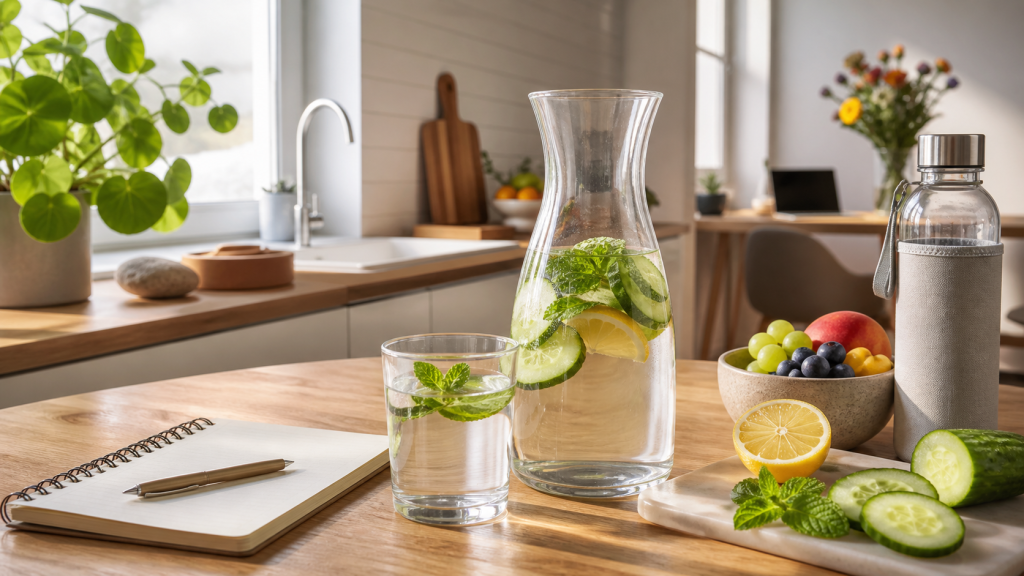
Do not make it stricter than needed. If you dislike still water, use sparkling water. If water feels boring, add lemon, cucumber, mint, frozen fruit or a little sugar-free cordial as a transition. The goal is not that only plain tap water is allowed. The goal is that drinking water becomes normal enough to make other choices less automatic.
Thirst and hunger can feel similar
Many people say they are hungry all day. Sometimes they are right. Sometimes part of it is thirst, tiredness, boredom, stress or habit. Thirst does not always feel like clear thirst. It can also feel like restlessness, craving something fresh, a dull headache or the urge to walk to the cupboard.
Drinking water does not solve real hunger. If your breakfast is weak, your lunch has little protein or your dinner barely fills you, you need food. But drinking water can help you feel the difference. Take a glass of water first, wait ten minutes and ask: am I still physically hungry, or was I mainly looking for a break?
That pause matters for people who snack constantly. Not because water is an appetite suppressant, but because it interrupts an automatic loop. You step out of seeing, grabbing, eating and only thinking afterwards. Drinking water gives you a small decision point back.
The biggest win is often what you replace
A glass of water contains no calories. That sounds almost too familiar, but it matters. Soda, juice, sweet iced coffee, energy drinks, chocolate milk, craft beer, wine and cocktails can add a lot of energy without matching fullness. Drinking water then is not an extra trick. It is a replacement.
Suppose you take a sweet drink every weekday afternoon. If you replace it with water, sparkling water, tea or coffee without sugar, you remove calories from the day without making your plate smaller. That is often easier than eating even less, especially if you already struggle to get enough protein, vegetables and normal meals.
We do not need to repeat every sugar-drink section here. The practical line is simple: drink calories deliberately. A glass of wine at dinner can be a choice. A cola because nothing else is ready is usually not a choice, but a habit. Drinking water makes that habit visible.
Drinking water and alcohol
Drinking less alcohol becomes easier when you have a plan for your hands, your glass and your rhythm. Drinking water helps with that. Have a glass before the first alcoholic drink, alternate afterwards and put something cold without alcohol in the fridge at home. That sounds small, but it stops alcohol from becoming the automatic start button of the evening.
Alcohol creates several issues at once: calories, lower inhibition, poorer sleep and more snacking. Drinking water does not remove those effects if you keep drinking a lot. It can slow the pace and make the move toward less alcohol more concrete. You have something in your glass without needing to explain every skipped round.
Do not use water as an excuse to drink more alcohol. The order is the other way around: choose less alcohol, then use water as practical support. For some people alcohol is a medical or addiction-sensitive topic. In that case personal advice matters more than a habit article.
How much is realistic?
The Dutch Nutrition Centre usually mentions 1.5 to 2 litres of fluid per day for adults as a practical guideline. That is not only water. Tea, coffee, milk and other drinks also count. For adult women and girls from 13 years, it mentions at least 1.4 litres of drinks per day. For adult men and boys from 13 years, it mentions at least 1.4 to 1.8 litres.
Sometimes you need more. In hot weather, fever, diarrhoea, vomiting, hard training or heavy sweating, you lose more fluid. The Dutch Nutrition Centre advises adults on very hot days to drink at least 2 litres, while also not drinking unnecessarily above 3 litres. More is not automatically better.
Drinking water is therefore not a competition. You do not need to force down four litres because someone online does that. People with heart failure, kidney disease or a prescribed fluid restriction should follow medical advice. For most healthy adults, the better question is: do I drink steadily through the day, or only late when I am already thirsty and tired?
A simple check without obsession
You cannot measure fluid balance perfectly by feel alone, but you can use signals. Dark urine can mean you have not drunk much, although food, supplements and medication can also affect colour. Very little urination, dizziness, confusion or illness with heavy fluid loss needs medical attention.
For normal days, a gentle check is enough. Do you often have a morning headache, dry mouth, little urination or cravings for cold sweet drinks? Drinking water earlier in the day may help. Are you urinating all day and forcing much more fluid than needed? Then you can calm it down.
Do not turn drinking water into new perfectionism. Health does not improve because every glass is logged. Health improves because you choose the simple baseline more often before reaching for calories, alcohol or snacks.
Routines that work in real weeks
Choose routines that require little thought. Put a glass next to your coffee machine, so you take water first and coffee afterwards. Fill a bottle before opening your laptop. Drink with every meal. Take a glass when you get home, before the evening routine starts. Keep a bottle in your gym bag and car.
Connect drinking water to moments that already exist. After brushing your teeth. Before the first meeting. When preparing lunch. While cooking. Before going for a walk. These links work better than vague intentions such as "drink more today". A habit needs a place.
If you often snack at night, create a fixed ritual: water or tea, wait ten minutes, then choose. If you still want food, take something that fits your plan. The glass of water is not punishment. It is a brake on the automatic reach for crisps, cookies or leftovers.
Make water more attractive without turning it into soda
Water does not need to be plain every time. Sparkling water, ice cubes, citrus, mint, cucumber, ginger or cold herbal tea can provide enough variation. Just watch that your water does not quietly become another sweet drink that runs all day. If every bottle needs to taste sweet, sweetness remains your default.
A transition step is fine. If you are coming from a lot of soda or alcohol, flavoured sparkling water can be an improvement. After a few weeks you can make the flavour softer. Drinking water does not need to move from zero to perfect. It can be a staircase: from sugary drinks to light drinks, from light drinks to sparkling water, from sparkling water to plain tap water more often.
RIVM states that tap water in the Netherlands can be drunk safely from the tap. That is practical and cheap. Bottled water is not necessary as a health upgrade for most people. A reusable bottle helps mainly because you have water with you, not because the bottle is special.
Drinking water supports fat loss, but does not replace food
If you want to lose weight, drinking water can help indirectly. It reduces liquid calories, makes snack breaks more deliberate and helps you keep meals normal. But drinking water does not compensate for consistently oversized portions, little sleep, little movement or alcohol every evening. Drinking water works best as support for choices you already want to make.
See water as support for the basics. Eat meals with enough protein, vegetables, fibre and volume. Use the FitterVitaal calorie need tool to estimate your day more realistically. Also read about strength training for weight loss if you want to become not only lighter, but stronger.
The combination works better than isolated tricks. Water on the table, normal meals, walking, strength training, better sleep and less alcohol reinforce each other. Drinking water is not spectacular, but it makes many other choices easier.
A practical day example
Morning: after waking, take a glass of water. Then coffee or tea without sugar. At breakfast, add another glass if you are thirsty. Afternoon: bottle on your desk, a glass with lunch and maybe sparkling water if you usually take soda. Late afternoon: water first, then decide whether you truly need a snack.
Evening: a glass while cooking and water on the table with dinner. If you drink alcohol, alternate with water and decide in advance how much alcohol you will have. Later in the evening, choose tea or water before opening the snack cupboard. This spreads drinking water across the day instead of making it a catch-up task at 10:30 p.m.
This is deliberately boring. Boring habits are often the habits that last. You do not need a perfect day. You need repeatable moments that make the next choice slightly easier.
Conclusion
Drinking water is not a miracle tool. It is a cheap, available and reliable baseline habit. For people who want to reduce soda, alcohol or constant snacking, drinking water helps mostly through replacement and delay: fewer liquid calories, more pause, less automatic behaviour.
Do not chase extreme litres. Aim for a drinking pattern that fits your day, body and health situation. Use the Dutch Nutrition Centre guidelines as a sober starting point and trust that Dutch tap water is, according to RIVM, a safe foundation.
Start small. Keep water visible. Drink with meals. Take a glass before snacking or drinking alcohol. Make drinking water normal enough that better choices take less effort. That is not exciting, but that is exactly why it works.


