Cholesterol sounds to many people like a list of forbidden foods. No eggs, no cheese, no shrimp and definitely no fat. That picture is too simple. Cholesterol in your blood is not determined only by cholesterol in food. For most adults, the food pattern, saturated fat, fibre, body weight, movement, smoking and medical follow-up deserve much more attention.
This article is general information, not a diagnosis or personal treatment plan. If you already have high cholesterol, use cholesterol-lowering medication, have diabetes, high blood pressure, heart disease in your family or previous heart symptoms, discuss your numbers and choices with your doctor or dietitian. Your blood values are not something to manage by online guesswork.
The practical message is calm. The Dutch Heart Foundation and Dutch Nutrition Centre both explain that a healthier lifestyle can reduce the chance of an unfavourable cholesterol profile. LDL cholesterol matters especially because high LDL can contribute to atherosclerosis and cardiovascular disease. So the question is not which single product is allowed. The question is which food and lifestyle pattern you can repeat for months.
Cholesterol and food starts with the whole pattern
Cholesterol and food does not start with a perfect shopping list. It starts with your normal week. What do you spread on bread? Which dairy do you choose? How often do you eat sausage, fatty meat, processed meat, cookies, pastries, snacks and cheese? How much vegetable, fruit, whole grains, legumes, nuts and fish are actually in your day?
The Dutch Nutrition Centre describes cholesterol as a fat-like substance your body needs. Your liver makes cholesterol itself. The problem starts when that balance is disrupted and LDL cholesterol becomes too high. That can relate to food, excess weight, little movement, stress, smoking, genetic factors, diabetes or other medical causes.
That is why cholesterol and food is not one isolated trick. You can eat oatmeal and still have a lot of cheese, processed meat and snacks every evening. You can avoid eggs and still take in a lot of saturated fat through butter, full-fat dairy, cookies and fried products. Look at the whole pattern, not at one symbol.
Saturated fat usually matters more than dietary cholesterol
Many people focus first on foods that contain cholesterol. That is understandable, but it is not the main lever. The Dutch Heart Foundation advises replacing saturated fat with unsaturated fat. The Dutch Nutrition Centre explains that saturated fat can raise LDL cholesterol. For most readers, that makes saturated fat more important than only counting how much a product contains in dietary form.
Where does it often show up? Think of butter, hard margarine, coconut fat, palm fat, full-fat cheese, full-fat dairy, fatty meat, sausage, processed meat, cookies, pastries, chocolate, snacks and savoury party foods. Not because you may never enjoy anything, but because these foods can easily become the fixed background of a week.
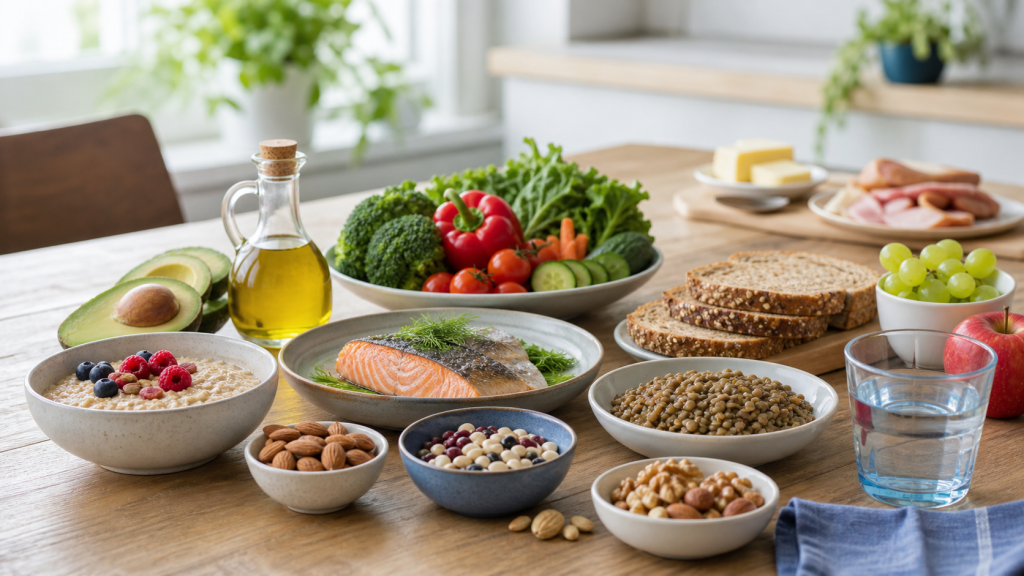
Replacement matters more than simply removing foods. Use soft or liquid margarine or oil more often instead of butter. Choose low-fat or semi-skimmed dairy more often. Eat fatty meat less often and use legumes, fish, chicken, tofu or other lean protein sources more often. Use nuts deliberately as a small portion. That works better when you make the plate smarter, not when you become afraid of fat.
Unsaturated fat is not permission to eat without limits
Olive oil, rapeseed oil, nuts, avocado and oily fish fit well in a more heart-friendly pattern. They mainly provide unsaturated fats. That is useful when they replace saturated fat. A salad with olive oil instead of creamy sauce is different from adding extra oil on top of a day that already contains plenty of energy.
Fat remains energy dense. A tablespoon of oil, a handful of nuts or half an avocado can fit well, but unlimited healthy fat can still support weight gain. Body weight also plays a role in blood-fat patterns. The Dutch Heart Foundation lists excess weight as a possible cause of high values. The Dutch Nutrition Centre names a healthy weight as part of lowering the chance of elevated cholesterol.
So use unsaturated fat with purpose. Cook with oil instead of butter. Eat nuts as a portion, not from an open bag. Choose oily fish once or twice a week if that fits your diet. Do not turn cholesterol and food into an oil and nut contest. Make it a smart swap.
Fibre deserves more attention
Fibre is less exciting than supplements, but it deserves real attention when blood fats are the topic. The most useful base foods are whole grain bread, oats, vegetables, fruit, beans, lentils, chickpeas, whole wheat pasta, brown rice, potatoes with skin, seeds and nuts. These foods make meals more filling and support a healthier food pattern.
Fibre also helps practically with weight control. A meal with beans, vegetables and whole grains fills differently from a meal with white bread, sauce and processed meat. That does not mean fibre replaces medication. It means cholesterol and food becomes easier to maintain when meals get more volume and structure.
Start gradually if you currently eat little fibre. Do not jump from very little to very high fibre in one day. Your gut needs time. Add oats at breakfast, choose whole grain bread at lunch, eat vegetables daily and use legumes twice per week. Drink enough fluid, especially when your fibre intake rises.
Eggs, shrimp and cheese: where the nuance sits
Eggs contain cholesterol. Shrimp and organ meat do too. Still, the effect of cholesterol-rich food on blood values is usually smaller than the effect of saturated fat. That does not mean unlimited eggs or cholesterol-rich products are wise. It does mean fear of an egg often makes less sense than daily butter, cheese, sausage, cookies and snacks.
The Dutch Nutrition Centre generally advises moderation with eggs, mainly because the total diet matters. For vegetarians there can sometimes be a little more room because they eat less meat and processed meat. If you have familial high cholesterol or have received medical advice, follow your personal advice instead of a general blog rule.
Cheese deserves extra honesty. Many people use cheese as a normal sandwich topping, snack and party food at the same time. Cheese provides protein and calcium, but also saturated fat and salt. The practical question therefore should not only be: do I eat eggs? Also ask: how much cheese and processed meat appear automatically every day?
Weight and waist size matter without body shaming
Cholesterol is not a character test. Some people have high values because of genetics or medical causes, even with good habits. Still, weight matters for many adults. Excess weight, especially around the waist, can relate to unfavourable blood fats, higher blood pressure and higher cardiovascular risk.
That does not call for a crash diet. A strict diet that works for two weeks and then rebounds probably helps cholesterol less than six months of normal meals, less saturated fat, more fibre, walking and strength training. The body responds to repetition.
Use the FitterVitaal calorie need tool if you want a more realistic view of your energy balance. Not to count obsessively, but to make portions more honest. This approach becomes stronger when you also look calmly at your weekly average and weight trend.
Movement helps with more than calorie burn
Movement is not punishment for eating. For cholesterol and heart health, movement is a separate pillar. The Dutch Nutrition Centre names enough movement as part of reducing the chance of elevated cholesterol. The Dutch Heart Foundation lists too little movement as a possible cause of high cholesterol.
Start simply. Walking after meals, cycling to appointments, taking the stairs more often and doing strength training twice per week are realistic steps. Most beginners do not need a complicated plan. They need repetition. You can also read about strength training for weight loss if you want to support muscle and health together.
Movement can positively influence HDL, triglycerides, blood pressure, insulin sensitivity, weight and fitness. That does not mean exercise fully corrects an unhealthy food pattern. It means cholesterol and food plus movement is stronger than changing only one sandwich topping.
Smoking belongs in the cholesterol conversation
Smoking deserves a place in this article, even though it is not a food. Cardiovascular risk is not determined by cholesterol alone. Smoking damages blood vessels and raises the risk of cardiovascular disease. If your cholesterol profile is already unfavourable, quitting smoking becomes even more important.
Many people try to perfect breakfast first because it feels controllable. But for heart health, quitting smoking can matter far more than debating one extra egg. That is not blame. Nicotine addiction is serious. That is why support is normal: a doctor, quit-smoking counselling, recognised programmes and medication can all have a place.
Food is therefore only part of the picture. Not smoking, enough movement, better sleep, stress reduction where possible and medical monitoring belong with it. You do not need to perfect everything at once, but you do need to be honest about the biggest levers.
When should you arrange medical follow-up?
High values often have no symptoms. You can feel fit and still have an unfavourable profile. Testing matters when you have risk factors: cardiovascular disease in the family, high blood pressure, diabetes, smoking, excess weight, previous heart symptoms, kidney problems, thyroid problems or an earlier high cholesterol result.
Ask someone qualified to explain your values. Total cholesterol does not tell the whole story. LDL, HDL, triglycerides, blood pressure, age, smoking status, family history and other risk factors together determine risk. Sometimes lifestyle is enough as a first step. Sometimes medication is sensible. That decision belongs with a doctor, not a food blog.
Do not stop medication by yourself because your eating has improved. Food can do a lot, but medication is sometimes needed alongside lifestyle, especially with familial risk or high total risk. The better approach is measure, adjust, measure again and decide together.
A practical cholesterol and food checklist
Use this checklist for one week. Not as a perfect score, but as a mirror. Do you usually use butter or a softer/liquid fat? Do you eat vegetables and fruit daily? Are whole grains on the table? Do you eat legumes? Do sausage, fatty meat or cheese often appear on bread? How often do you take cookies, pastries, chocolate or takeaway snacks?
Look at your standard groceries too. What is not at home needs less resistance. Buy oats, whole grain bread, legumes, vegetables, fruit, low-fat dairy, unsalted nuts, fish or other protein sources. Do not put butter, processed meat, cookies and snacks on automatic repeat.
Then make two concrete swaps. For example: soft margarine or oil instead of butter, and beans or chicken breast instead of sausage at three lunches. Or: oats with fruit instead of weekday croissants, plus a fixed walk after dinner. The checklist becomes useful when the swaps are small enough to repeat.
Conclusion
Your blood fats deserve attention, but not panic. For most adults, the biggest win is not avoiding one single egg. The biggest win is less saturated fat, more fibre, healthier weight, more movement, not smoking and medical follow-up when your risk is higher.
Make it concrete. Replace butter more often with oil or soft margarine. Choose whole grains, vegetables, fruit and legumes more often. Watch cheese, sausage, snacks, cookies and pastries. Move daily and arrange testing when your values or risk factors call for it.
This approach does not work because you become afraid of eating. It works because you build better standards week after week. That is less dramatic than a forbidden-food list, but much more useful for your heart.


