
Fiber weight loss sounds less exciting than a new supplement, but it is often the normal foundation that is missing. Fiber weight loss does not mean fiber burns body fat. It means meals can bring more volume, chewing and calm, so losing weight depends less on fighting hunger all day.
This article is general information, not personal medical advice. If you have diabetes, bowel disease, irritable bowel syndrome, a stoma, recent bowel surgery, severe constipation or medication affected by diet, discuss changes with your doctor or dietitian. Fiber weight loss works best when it fits your body and is built gradually.
The Dutch Nutrition Centre describes dietary fiber as carbohydrates that are not digested or absorbed in the small intestine. Fiber is found mainly in vegetables, fruit, potatoes, whole grain products, legumes and nuts. Diabetes Fonds explains that fiber can slow the absorption of carbohydrates from food, which can help blood sugar stay steadier. MDL Fonds also stresses the role of fiber in gut health, bowel movements, fullness and the microbiome.
Fiber weight loss starts with normal groceries
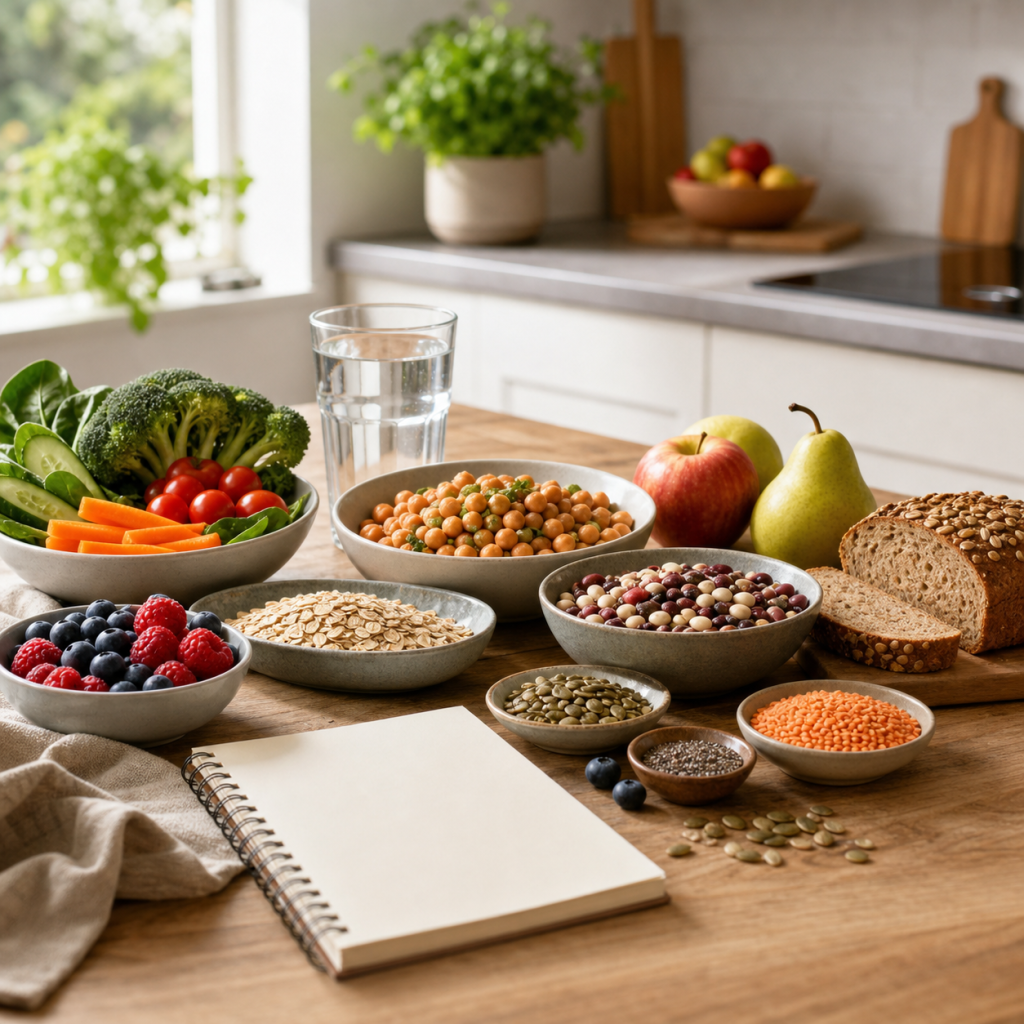
Fiber weight loss does not start with powders, bars or an extreme challenge. It starts with what goes into your shopping basket. Think whole grain bread, oats, beans, lentils, chickpeas, vegetables, fruit, potatoes with skin, brown rice, whole grain pasta, nuts and seeds. These are not spectacular foods. That is why they work in ordinary weeks.
A low-fiber day often looks simple: white bread, little vegetable intake, fruit juice instead of whole fruit, snacks between meals and a dinner with few legumes or whole grains. Calories can be high while fullness stays low. Fiber weight loss is not a trick here. It is a better swap: more plant structure inside the same normal eating pattern.
Make it concrete. Choose whole grain bread instead of white bread. Eat oats instead of a sweet breakfast product. Add beans to soup, salad or chili. Choose whole fruit instead of juice. Fill the plate with vegetables before sauce, cheese or snacks take over. Fiber weight loss becomes realistic when the basic meal is stronger.
Why fiber fills better
Fiber weight loss matters mostly because of satiety. High-fiber foods often require more chewing, contain more volume and make a meal feel more substantial. A plate with lentils, vegetables and brown rice eats differently from white pasta with little vegetable content. The second option can disappear fast and leave you hungry sooner.
That does not mean fiber automatically causes weight loss. You can still eat a lot of energy from nuts, granola, avocado and large portions of whole grain pasta. Fiber weight loss works when high-fiber food replaces less filling choices, not when you add extras on top of everything.
Use the plate as a practical check. Half a plate of vegetables, a good protein source, a whole grain or potato base and some healthy fats if needed. Legumes can provide both fiber and plant protein. That creates a meal that gives enough without requiring constant tracking.
Fiber weight loss and blood sugar without rewriting diabetes
Fiber weight loss also touches blood sugar, but this is not another diabetes article. The practical point is simpler: meals with fiber are often digested more slowly than meals with little fiber and many fast carbohydrates. Energy can be released more calmly, and hunger may return less quickly.
Diabetes Fonds notes that fiber can slow the absorption of carbohydrates and support steadier blood sugar in diabetes. For people without diabetes, the everyday lesson is similar but less medical: choose whole grains, oats, legumes, vegetables and fruit more often than white bread, white rice, juice, cookies and snack foods.
Stay sober about this. If you have diabetes and monitor blood glucose, follow your treatment plan. Do not change medication because you eat more fiber. Fiber weight loss can support better nutrition, but medical values belong in professional care.
Your gut likes gradual change
A classic mistake is moving from almost no fiber to a huge amount in one day. That can lead to gas, bloating, cramps or unsettled stools. Fiber weight loss requires patience. Your gut and microbiome need time to adapt to more plant foods.
Start with one small step per week. Week one: whole grain bread at lunch. Week two: an extra vegetable portion each day. Week three: legumes twice per week. Week four: oats or another whole grain breakfast. Week five: fruit visible and ready. Fiber weight loss then becomes a build-up, not an attack on your gut.
MDL Fonds advises drinking enough when you increase fiber, because fiber absorbs fluid. That matters. More fiber without enough fluid can make stools harder. Put water, tea or unsweetened coffee beside your fiber steps. You can also read drinking water if hydration is not yet automatic.
Legumes are the overlooked main player
If fiber weight loss has a quiet champion, it is legumes. Beans, lentils, chickpeas, split peas and other pulses are cheap, shelf-stable and filling. They work in chili, curry, soup, salad, wraps, stews and pasta sauce. You do not need to become vegetarian overnight to benefit.
Start with half a portion. Add lentils to tomato sauce. Put chickpeas in a lunch salad. Replace half the minced meat in chili with beans. Thicken soup with lentils. Fiber weight loss then feels less like eating less and more like filling meals smarter.
Rinse canned legumes if you want less salt. Build portions slowly if your gut is sensitive. Combine them with vegetables, herbs and enough fluid. Legumes are not a magic slimming food, but they help a meal keep working for longer.
Fruit beats juice
Fruit fits fiber weight loss best when you eat it rather than drink it. An apple, pear, orange, berries or kiwi gives fiber, fluid and chewing. Juice delivers liquid energy and usually misses the fullness of whole fruit. You can drink several pieces of fruit quickly without feeling equally satisfied.
Use fruit as a normal snack or breakfast addition. Berries with oats, an apple beside lunch, a pear in the afternoon or an orange after dinner. Dried fruit can provide fiber, but it is compact and easy to overeat. Keep it as a small portion.
Fiber weight loss does not need to make fruit complicated. Choose what you will actually eat. Two ordinary fruit moments you can repeat are better than expensive exotic plans that disappear after three days.
Whole grain is more than brown color
Whole grain means the entire grain kernel is used. That provides more fiber and nutrients than white versions. For fiber weight loss, this is one of the easiest swaps: whole grain bread, whole grain pasta, brown rice, oats, whole grain couscous or rye bread.
Watch marketing. Brown bread is not always whole grain. A fiber claim on a snack bar does not make it a staple food. The Dutch Nutrition Centre notes that a product called high in fiber must meet a fiber threshold, but the overall food quality still matters. Usually choose simple foods with a recognizable base.
Make the swap gradually if your household needs time. Half whole grain pasta and half regular pasta can be a bridge. Alternating rice with brown rice can also help. Fiber weight loss is stronger when the people at the table keep eating the food.
How much fiber do you need?
The Dutch Nutrition Centre says fiber needs depend on energy needs and mentions at least about 24 grams per day for adult women and 30 grams for adult men. MDL Fonds refers to the Dutch Health Council advice of 30 grams for women and 40 grams for men. You do not need to obsess over the numbers, but they show how quickly a day with white bread, little vegetable intake and no legumes falls short.
Fiber weight loss begins with checking without turning it into bookkeeping. Write down one day: how much whole grain, vegetables, fruit, legumes, nuts and seeds appeared? If the answer is almost none, you do not need a complicated app yet. The first improvement is obvious.
Use a gentle weekly target. Vegetables daily. Two fruit moments. Mostly whole grain. Legumes two to four times per week. A small portion of nuts or seeds. Then adjust.
Mistakes that make fiber weight loss harder
Mistake one: relying only on high-fiber snacks. Some bars or breakfast products contain added fiber, but also plenty of calories, sweeteners or saturated fat. They can fit, but they do not replace vegetables, fruit, legumes and whole grain basics.
Mistake two: increasing too fast. More fiber without a gradual build can cause gut complaints. Mistake three: drinking too little. Mistake four: treating fiber as permission to make portions endlessly larger. Fiber weight loss still belongs inside energy balance.
Mistake five: improving breakfast only. Oats are useful, but if lunch and dinner stay low in fiber, the day remains weak. Spread fiber through the day. Breakfast, lunch, dinner and snacks can all contribute a little.
A practical fiber day
Morning: oats with berries and some seeds, or whole grain bread with egg and tomato. Lunch: whole grain bread or a salad with beans, vegetables and a protein source. Snack: fruit or raw vegetables. Dinner: chili with beans, brown rice and vegetables, or whole grain pasta with lentils and extra vegetables.
Drink steadily through the day. Water with meals, tea between meals and extra attention when you increase fiber. Combine this with walking or strength training. Fiber weight loss works better when your whole day becomes calmer, not only your breakfast.
If you also want to estimate your energy intake more realistically, use the FitterVitaal calorie need tool. The point is not to control every gram, but to see how portions, fullness and movement work together.
Conclusion
Fiber weight loss is not a miracle claim. It is a practical way to make normal meals more filling, calmer and better for your gut. The foundation is vegetables, fruit, legumes, whole grains, potatoes, nuts and seeds.
Start small, build gradually and drink enough. Choose real high-fiber foods more often than package claims. Keep medical situations separate and ask for advice if you have gut complaints, diabetes or other health questions.
The forgotten tool is not in a tub. It is in your normal groceries. Fiber weight loss becomes useful when you build a plate that makes hunger less aggressive. Fiber weight loss is quiet, but quiet habits are often the ones that last.


