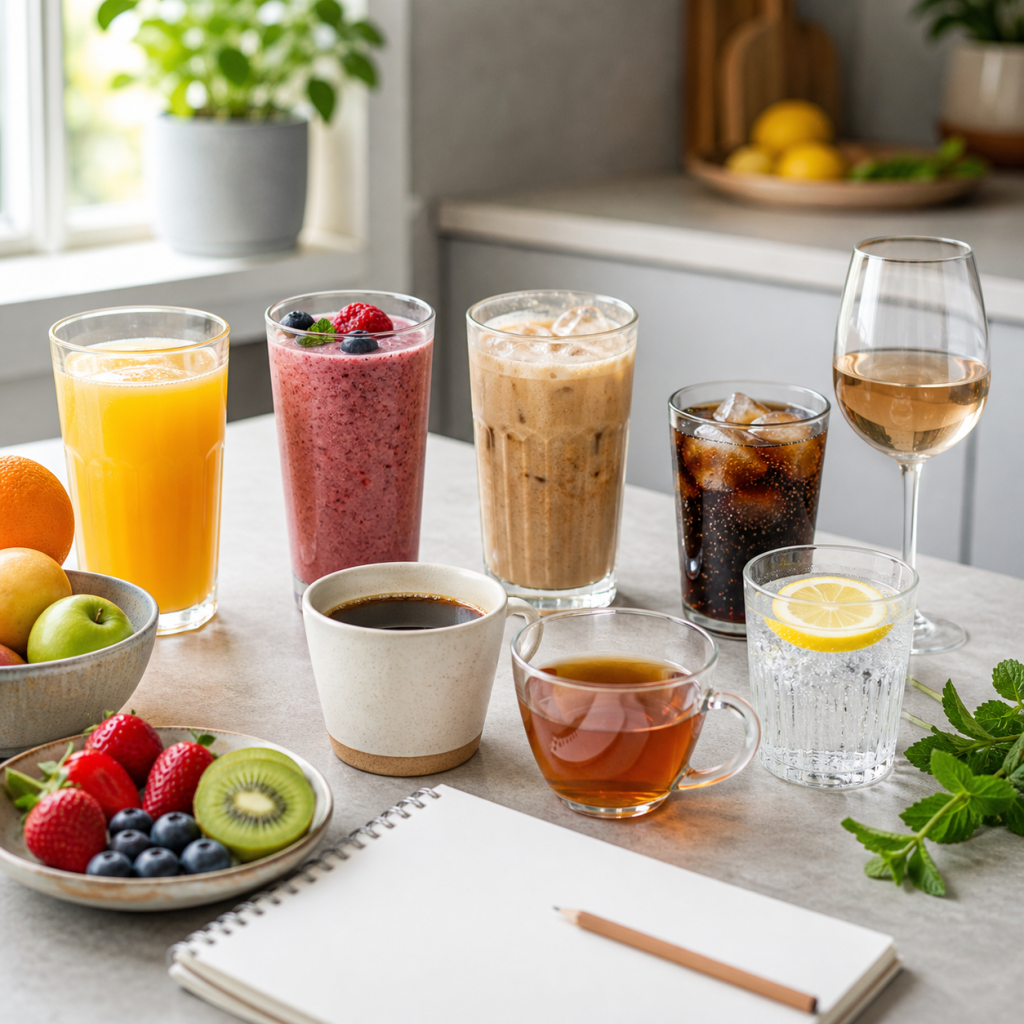
Liquid calories are often the calories people take least seriously. You drink something between meals, on the way to work, with coffee, after training or with dinner, and it does not feel like a meal. Yet soda, juice, a smoothie, a sweet coffee drink or an alcoholic drink can still count toward your day. The issue is not that every drink is forbidden. The issue is that liquid calories usually fill less than food while still supplying energy.
This article is general nutrition information, not medical advice. If you have diabetes, digestive symptoms, eating problems, pregnancy, medication or personal medical questions about alcohol or sugar, discuss your situation with a doctor or dietitian. For most FitterVitaal readers, the practical question is simple: which liquid calories add hidden energy, and which swaps make weight loss easier without making life dull?
The Dutch Nutrition Centre lists soda, juice and alcohol as examples of products outside the Wheel of Five that often provide many calories. The World Health Organization advises limiting free sugars to less than 10 percent of total energy intake, with additional benefit when lowering intake further toward 5 percent. Liquid calories from sugary drinks count in that total.
Liquid calories fill differently from food
Liquid calories are difficult because drinking is fast. You have to chew an apple. Apple juice can disappear in a few sips. A bowl of yogurt with fruit takes time to eat. A smoothie can be finished while walking to work. Your stomach receives volume, but chewing, fibre structure and eating time are different. Because of that, many people do not automatically compensate later by eating less.
That is why liquid calories so easily land on top of your normal pattern. Breakfast stays the same, lunch stays the same and dinner stays the same, but a sweet coffee, juice or evening drink is added. Liquid calories feel like atmosphere, thirst or habit, not like food. Your body still receives energy.
The solution is not that you can never enjoy a drink again. The solution is treating drinks as part of your day. If you drink something calorie-rich, make it a conscious choice instead of a free extra.
Soda: quick, sweet and easy to underestimate
Soda is the most obvious source of liquid calories. A can or glass with sugar gives energy without fibre, protein or meaningful fullness. It is mostly flavoured sugar water. That explains why it can work against a weight-loss phase so quickly: it uses calories, but hardly solves hunger.
The Dutch Nutrition Centre describes light soda as a version in which sugar is partly or fully replaced by sweeteners. Because of that, you consume no or fewer calories than with sugary soda. At the same time, light soda is also not part of the Wheel of Five, partly because acids can affect tooth enamel. Practically, zero or light can be a useful swap for liquid calories, but it should not automatically become your only thirst drink.
Work with moments. If you drink regular soda every day, first replace weekday glasses with zero, sparkling water or tea. Keep regular soda for a chosen moment if you truly want it. That lowers liquid calories without turning the plan into perfection.
Juice: drinking fruit is not the same as eating fruit
Juice sounds healthy because it comes from fruit. Still, juice and whole fruit are not the same. The Dutch Nutrition Centre notes that a 200 millilitre glass of apple juice contains about 21 grams of sugar on average, comparable to cola. Juice is also outside the Wheel of Five. The practical reason is that you can drink liquid calories quickly while missing the full effect of chewing and the original structure.
For liquid calories, juice is therefore sneaky. Many people would not casually eat four oranges in a row, but they can drink a large glass of orange juice without thinking. The body receives energy while the mind says: healthy choice. That gap between image and fullness makes juice difficult.
A better swap is to eat whole fruit and keep the drink simple. Have an orange or apple with water, tea or unsweetened coffee. If you still want juice, choose a small glass and place it with a meal rather than using it as a thirst drink. Then it stays a choice instead of an automatic sugar stream.
Smoothies: useful, but not magic
Smoothies have a healthier image than soda, but liquid calories from smoothies can count just as strongly. This is especially true when banana, mango, juice, honey, peanut butter, full-fat yogurt, oats and seeds all go into the blender. That can contain nutrients, but it can also become a small meal that you treat as a drink.
The Dutch Nutrition Centre states that smoothies are not included in the Wheel of Five and that people feel full less quickly when they do not need to chew. That does not make every smoothie bad. It means a smoothie should be judged honestly. A protein-rich smoothie after training can be useful. A large fruit-and-juice smoothie next to a normal lunch is often simply extra energy.
If you want to keep smoothies, make liquid calories smaller and more functional. Use water or low-fat yogurt as the base, choose one portion of fruit, add vegetables if you like, and skip juice, honey and large spoons of nut butter when fat loss is the goal. Eat part of the ingredients separately if hunger is the problem.
Coffee drinks: coffee is not the problem
Black coffee contains almost no calories. Liquid calories usually come from what you add: milk, sugar, syrup, whipped cream, chocolate sauce or large portions. Plain coffee and a large sweet coffee drink are therefore not the same habit. They share the word coffee, but liquid calories do not have the same effect on your daily total.
The Dutch Nutrition Centre calorie checker shows that plain coffee provides very little energy, while coffee with milk and sugar, latte macchiato and other milk-based versions can add noticeably more. That is not an issue when it fits your plan. It becomes a problem when a sweet coffee feels like a drink but functions more like a snack.
Make coffee clearer. Are you drinking it for caffeine or for dessert feeling? For caffeine, black coffee, americano, espresso or coffee with a splash of milk is usually enough. For dessert feeling, choose liquid calories deliberately, but name it as a treat. Read caffeine: coffee, pre-workout, sleep and stress if coffee mainly drives your energy rhythm.
Alcohol: do not repeat the full article, but count it
Alcohol deserves its own article, and FitterVitaal already has one. Here the point is narrower: alcohol also provides liquid calories. The Dutch Nutrition Centre states that alcohol provides 7 kilocalories per gram. On top of that come sugars in mixed drinks, beer, wine, cocktails and the snacks that often appear with alcohol. A few drinks can make a tidy week much less tidy.
For this topic, alcohol does not need to be complicated. Count liquid calories. A glass of wine, beer or a cocktail is not a zero moment because it is social. Alcohol-free versions can also contain calories, although products differ a lot. Check the label, portion and frequency.
The best swap for results is often no alcohol. If you want something social in your hand, choose sparkling water with lemon, an alcohol-free beer with a calorie check, light soda or tea. For more on health, sleep and choices, read alcohol and weight loss. The short lesson here: liquid calories from alcohol are rarely worth it during a fat-loss phase.
Why drinks do not guide hunger well
The body does not respond to all energy in the same behavioural way. A solid meal with protein, fibre and volume usually satisfies better than a sweet drink. That does not mean calories from drinks count differently in physics. It means they do less to help you eat less later. As a result, liquid calories often sit on top of normal intake.
Imagine drinking a juice and a sweet coffee every workday. Separately, liquid calories look small. Together they can add hundreds of calories per day. If you do not then eat less at lunch or dinner, your calorie deficit disappears. You may be doing many things right, but you are drinking away your margin.
That is why controlling liquid calories can be so effective. You do not need to rebuild your whole diet. You also do not need to be hungry. You mainly remove energy that gives little fullness. That is a pragmatic trade.
Smart swaps without diet drama
Start with your fixed moments. The biggest win usually does not come from the drink you have three times a year. It comes from the drink you have four to seven times per week. Liquid calories matter most through repetition.
Practical swaps for liquid calories:
- Regular soda to zero, sparkling water or tea.
- Large juice to whole fruit plus water.
- Large smoothie to a smaller smoothie with yogurt and no juice base.
- Syrup latte to cappuccino, a smaller milky coffee or black coffee.
- Cocktails to sparkling water, calorie-checked alcohol-free options or no alcohol.
- Chocolate milk or sweet dairy drinks to eating unsweetened yogurt instead of drinking it.
Choose a swap you will actually do tomorrow. Not the perfect swap, but the repeatable one. If you lower liquid calories by 150 to 300 kcal five days per week, the difference becomes visible faster than many people expect.
The 7-day drink check
Use a short test week. Write down what you drink for seven days, without judgment. Note regular soda, juice, smoothies, coffee versions, milk drinks, alcohol, sports drinks and energy drinks. Add whether the reason was thirst, habit, hunger, stress or social comfort. This makes liquid calories visible.
Then choose two rules. Rule one: thirst defaults to water, tea or unsweetened coffee. Rule two: liquid calories belong to chosen moments, not automatic thirst. These rules are boring, but they work because they remove decisions.
Use the FitterVitaal calorie need tool if you want to understand your daily room. Once you see that a few drinks can take a large part of your deficit, the choice becomes concrete. Not because drinks are forbidden, but because you understand the cost.
When a calorie-rich drink can still fit
Not every source of liquid calories is wrong. An athlete who struggles to eat enough may need a smoothie. Someone with low appetite may temporarily find liquid nutrition easier. A cappuccino with milk can fit perfectly well into a day. Context decides.
For weight loss, the question is different: does this drink help me, or does it make hunger and my daily total harder? If you still eat lunch as usual after a smoothie, it was probably not a useful choice. If a smaller protein-rich smoothie helps recovery and prevents snacking, it can be functional.
So separate functional from automatic. Functional means you choose it deliberately for a goal. Automatic means it happens because it always happens. Most progress with liquid calories comes from automatic moments.
Conclusion
Liquid calories are not mysterious. Soda, juice, smoothies, sweet coffee drinks and alcohol provide energy, but often fill less than food. That can quietly shrink your calorie deficit, even when your meals are fairly reasonable.
The practical answer is not strict living. Drink smarter. Eat fruit more often than you drink it. Make coffee simpler. Keep smoothies small and goal-based. Count alcohol honestly and choose no alcohol more often. Use light or zero as a stepping stone when helpful, but build your base around water, tea and unsweetened coffee.
Start with one week of awareness and one or two fixed swaps. Liquid calories are powerful to address because you can gain a lot without reducing plate volume. That usually makes weight loss calmer, clearer and easier to keep doing.


