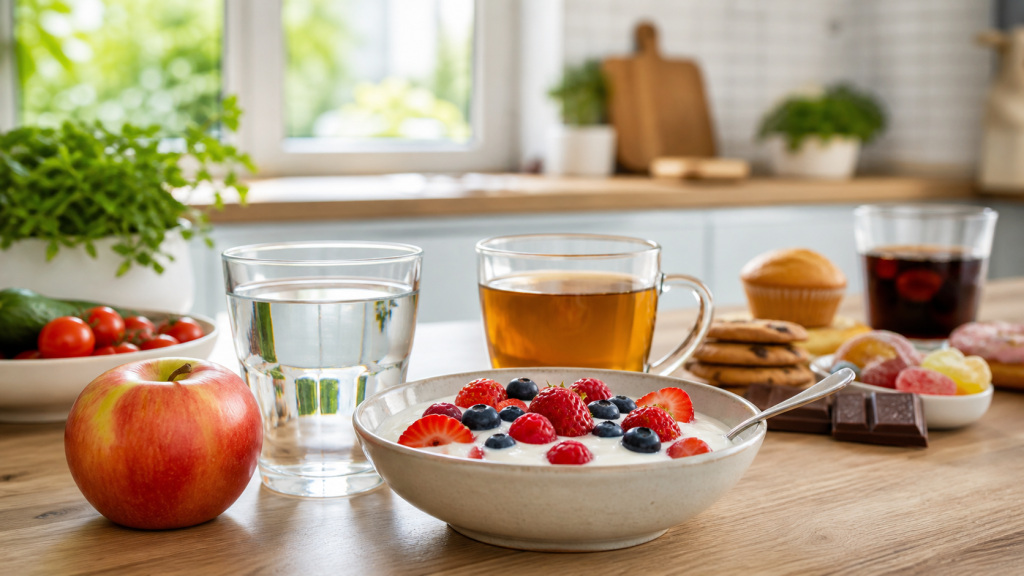
Sugar and weight loss is often made far too dramatic. One side calls sugar poison. The other side says it is only about calories and that you do not need to care about anything else as long as you are in a deficit. The useful truth is more practical. Sugar is not magically harmful, but foods and drinks high in added sugar make it very easy to eat more calories than you planned.
That is why sugar and weight loss deserves attention. Not because a banana, a glass of milk or a little sugar in coffee ruins your goal. But because soft drinks, juice, cookies, sweets, cakes, sweet breakfast foods, sauces and snacks often do not keep you full. You can eat or drink them on top of your normal meals. Then your daily energy intake rises without much extra fullness.
The Dutch Nutrition Centre makes a useful distinction: sugar occurs naturally in fruit and milk, while many cookies, sweets, cakes, soft drinks, sweet desserts, sauces and dressings contain added sugar. The WHO recommends reducing free sugars to less than 10 percent of total energy intake, with possible extra benefit below 5 percent. That does not mean you need a sugar-free life. It means that reducing added and free sugars is a smart foundation for many people.
Sugar and weight loss: what is the real problem?
Sugar and weight loss still comes down to energy balance. If you consistently eat more energy than you use, fat loss will not happen. But it is too simple to say that sugar is therefore irrelevant. The form of calories matters for hunger, cravings, habits and fullness.
A boiled potato, oats, yoghurt with fruit or a meal with vegetables and protein takes chewing and fills the stomach. You get fibre, water, volume and nutrients. A glass of soda or a few cookies can provide a similar amount of energy, but usually much less fullness. That makes it easier to eat normally afterwards as if nothing happened.
The issue is not that sugar directly switches off fat burning. The issue is that sugary products are often compact, tasty, fast and low in satiety. They are easy to keep eating. Ultra-processed foods often combine sugar with fat, salt, flavourings and soft textures. That combination makes portion control harder.
That is why FitterVitaal avoids fear language. Fear may help for a week. Insight helps for longer. Do not only ask: how much sugar is in this? Also ask: does this fill me, does this fit my goal, and am I choosing it consciously or automatically?
Added sugar is not the same as fruit
Much confusion starts with the word sugar. Your body breaks different carbohydrates down into smaller sugars, including glucose. Fruit contains sugars. Milk contains lactose. Wholegrain foods can contain small amounts of sugar. That does not make those foods the same as sweets or soda.
The Dutch Nutrition Centre explains that fruit is healthier than sweet snacks with added sugar because fruit also provides fibre, vitamin C and other useful nutrients. That is the key point. The body recognises sugar as sugar, but the whole food matters. Eating an orange is different from drinking orange juice. Eating an apple is different from eating candy, cookies or drinking apple juice.
For sugar and weight loss, that distinction matters. People who try to avoid all sugar often remove foods that can actually help: fruit, yoghurt, milk, vegetables and wholegrain products. That is unnecessary and usually unhelpful. Your goal is not zero sugar. Your goal is fewer products that provide a lot of energy and very little in return.
A practical rule: protect normal food and limit added sugar. Keep fruit. Keep dairy if you tolerate it well. Choose oats, wholegrain bread, potatoes, legumes and vegetables more often than snacks that mostly deliver sugar, fat and refined flour.
Liquid calories are the easiest win
If you want one quick step, start with drinks. Soda, energy drinks, juice, iced tea, sports drinks, sweet coffee drinks and alcoholic mixed drinks provide calories without much fullness. Diabetes Fonds warns that sugary soft drinks can strongly affect blood glucose and advises drinking as few sugar-sweetened beverages as possible, especially for people with diabetes.
For weight loss, the effect is straightforward. Imagine drinking two glasses of soda or juice every day. Your body often does not register that as a real meal. Lunch and dinner stay the same. You have quietly added another layer of energy to the day. Replace that with water, sparkling water, tea or coffee without sugar, and you remove calories without shrinking your plate.
This is one of the main reasons sugar and weight loss can clash. Not because of one teaspoon of sugar by itself, but because drinkable sugar can return every day. Juice deserves special attention. It sounds healthier than soda, but fruit juice also contains free sugars and lacks the chewing and fibre structure of whole fruit.
Make it practical:
- keep water visible at your desk or in the kitchen;
- choose tea, coffee without sugar or sparkling water as your default;
- keep soda as a conscious exception, not a thirst drink;
- choose whole fruit instead of juice;
- use sports drinks only when sports nutrition is truly functional.
Blood sugar swings and cravings
Not everyone feels the same after sugar. One person can eat a sweet snack and move on. Another quickly gets hungry again, feels tired or starts looking for more. Still, the pattern is familiar: fast carbohydrates without much fibre, protein or fat can be absorbed more quickly. In some people, that can create a stronger rise and fall in perceived energy.
That does not mean you should diagnose yourself. It means your own response is useful information. If a sweet breakfast leads to snack cravings at 10:30, do not try to solve that with discipline alone. Solve it with better building blocks: protein, fibre, volume and less added sugar.
For sugar and weight loss, stability often beats struggle. A breakfast with yoghurt, quark, oats, fruit and nuts is usually easier to sustain than sweet cereal or cake-like breakfast foods. A lunch with protein and vegetables often prevents the afternoon dip better than a quick sweet snack. A dinner with enough volume can make sofa snacking less automatic.
If you have diabetes, use medication or often have symptoms around blood glucose, discuss food choices with your doctor or dietitian. General education is not personal medical advice.
Why snacks stack so easily
Sugar rarely comes alone. Many snacks combine sugar with fat, refined flour, salt and flavourings. Think cookies, cake, chocolate, doughnuts, bars, ice cream and pastries. These are not foods that quickly tell your body: done, enough. They are easy to keep eating.
That is why environment matters. If cookies, sweets and chocolate are visible every evening, you have to say no every evening. That is tiring. You gain more by making your environment simpler. Keep fruit visible. Keep yoghurt, quark or eggs available. Buy smaller packs. Do not keep trigger foods as a standard pantry item.
Sugar and weight loss is therefore not only about knowledge. It is also about friction. Make better choices easy and automatic choices harder. You do not need to prove endless resistance. You are allowed to set up your kitchen so you need less resistance in the first place.
A useful supermarket question is: am I buying this because it fits my plan, or because my future tired self will probably eat it? That sounds strict, but it is actually kind. You help yourself before the difficult moment arrives.
Practical sugar reduction without an extreme diet
Do not start by changing everything at once. For three weeks, choose a few fixed actions. For example: no sugar-sweetened drinks on weekdays, a protein-rich breakfast, fruit as the first snack, and sweet snacks only as a conscious portion after a meal. That is concrete enough to follow.
Use these steps:
- replace soda and juice first, because liquid calories do not fill well;
- eat fruit more often than you drink fruit;
- choose a breakfast without a large sugar hit: yoghurt, quark, oats, eggs or wholegrain bread;
- combine carbohydrates with protein and fibre;
- read labels on breakfast cereals, bars, sauces and dressings;
- buy sweets by portion instead of by pantry stock;
- plan a conscious treat so you avoid all-or-nothing thinking;
- sleep enough, because tiredness makes sweet choices more attractive.
This is not a sugar-free programme. It is a better pattern. If 80 percent of your choices become calmer, exceptions do not need to be a disaster. A birthday, dessert or cookie can fit. The problem starts when exceptions quietly become daily habits.
How FitterVitaal makes this practical
At FitterVitaal, the goal is not panic around one ingredient. The goal is overview. How much energy do you roughly need? Where are your easiest extra calories? Which meals actually fill you? Which habits make cravings worse or calmer?
Use the FitterVitaal calorie need tool to estimate your starting point. You can also read our guide to calculator tools for BMI, body fat and calories for more context. Then work with normal food: protein, vegetables, fruit, whole grains, dairy or alternatives, healthy fats and clear portions.
Sugar and weight loss becomes easier when you do not only eat less, but also improve fullness. A good breakfast can protect the afternoon. A planned lunch can reduce snacking. A kitchen without default soda can remove hundreds of calories per week. These are not spectacular hacks, but they work because they are repeatable.
Conclusion
Sugar and weight loss needs nuance. Sugar is not poison, and you do not need to fear fruit, milk or normal carbohydrates. But a lot of added and free sugar can make weight loss harder, especially through soda, juice, snacks, cakes, sweet breakfast foods and ultra-processed products.
The best approach is not panic, but priority. Drink less sugar. Eat more foods that fill you. Read labels. Plan treats consciously. Make your environment easier. And remember: you do not need a perfectly sugar-free life to lose fat. You mainly need fewer calories that barely satisfy you.
Sources
- Voedingscentrum: How can I eat less sugar?
- Voedingscentrum: Is sugar bad for you?
- Voedingscentrum: Are fruit sugars better than added sugars?
- WHO: Guideline, sugars intake for adults and children
- WHO: reduce sugars intake news release
- Diabetes Fonds: why reduce soft drinks
- Diabetes Fonds: drinking choices


